
Security | Threat Detection | Cyberattacks | DevSecOps | Compliance

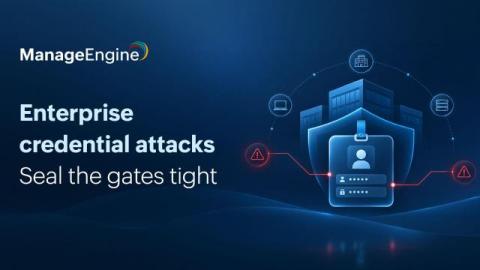
Enterprise credential attacks: Seal the gates tight

The walls of Troy were never breached. The Trojan horse only needed the city gates to be opened. The Trojans saw it as a gift from the gods and welcomed it with complete trust, only to be deceived by the hidden Greek army inside the horse, which broke out and conquered Troy. Today's cyberattacks happen in many different ways. But the playbook remains the same as in older times: deceive users' trust.

DHCP reservations for reliability: Maintaining consistent IP assignments for critical network devices with DDI Central

Modern enterprise networks support more than just computers, servers, and mobile devices. Organizations also rely on various connected devices and network infrastructure to support their day-to-day operations and maintain essential business functions. These devices often communicate with centralized management platforms to exchange information, receive configurations, and perform their designated functions.

Microsoft 365 outage phishing campaign highlights the need for phishing-resistant MFA

After Microsoft 365's service disruption on November 12, 2026, attackers were quick to exploit the uncertainty. Within a day, a phishing campaign began circulating emails that appeared to be legitimate Microsoft 365 service-health notifications. The messages warned recipients that emails held during the outage would be permanently deleted unless they acted quickly to recover them.

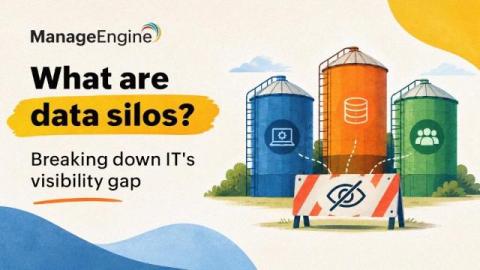
What are data silos? Breaking down IT's visibility gap

Data silos are where IT data gets locked up in isolated, disconnected systems, and you can't get a view across service management, security, and operations. They're the result of organizational boundaries, legacy tools, and poor data governance. For IT managers looking to tackle silos, the first step is to identify where data is currently stored and who has access—practical actions like conducting a data audit or mapping existing silos provide a clear starting point.

Solve 6 everyday business problems with free remote access software

In today's sprawling business world, work doesn't happen in a single office building anymore. Staff are positioned hybrid and offices are spread across cities and countries, sales and field teams live out of hotels and airports. The IT team, however small, is expected to keep each of those computers running. When a computer starts throwing errors two floors or two time zones away, someone still has to fix it. That's exactly what remote access software is built for: from a single console, you can connect troubleshoot, and secure the computers your company depends on, wherever they happen to be.

Java4Shell mitigation: How to find and patch affected Java installations with Endpoint Central

On November 17, 2026, the security research firm Calif disclosed Java4Shell (CVE-2026-114938), a memory corruption flaw in the Base64 decoder of OpenJDK. A crafted Base64 string can crash a Java process, leak heap memory or, in some cases, let an unauthenticated attacker run code. The researchers rate it 9.2 (Critical) on CVSS 4.0, while Oracle rates it 8.1 on CVSS 3.1. Oracle addressed the flaw in its November 2026 security update, and other Java distributors are publishing their own updates.

Unvetted AI agents in bank accounts are not just an AI problem; they are also an identity problem

Recently, several of the largest banks in the United States have found something unsettling inside customer accounts: Activity looked human enough to pass at a casual glance, but it was not coming from a human at all. According to Axios, major US banks are detecting unauthorized third-party AI agents operating inside customer accounts.

DNS filtering the smart way: 12 granular ways to protect your network

What if DNS could distinguish a security threat from a legitimate business need, a workday from a lunch break, and an authorized user from an unauthorized one? It's 10:15am on a Tuesday. A marketing executive opens YouTube to watch a product training video. Instead of the video, they're greeted with an access restriction. Across the office, a designer can't access a reference on Instagram. A sales representative is unable to research a prospect on LinkedIn.

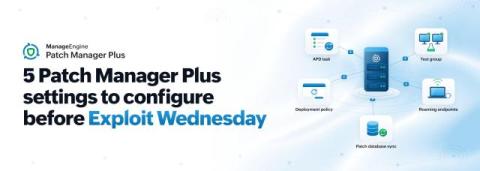
5 Patch Manager Plus settings to configure before Exploit Wednesday

Patch Tuesday gives IT teams fixes. It also gives attackers a map. When Microsoft publishes its monthly security updates, researchers and threat actors alike can compare patched and unpatched files to pinpoint exactly what was broken. The day after, informally known as Exploit Wednesday, is when working exploits for freshly disclosed flaws start to circulate. Every endpoint that's still unpatched is now a documented target.

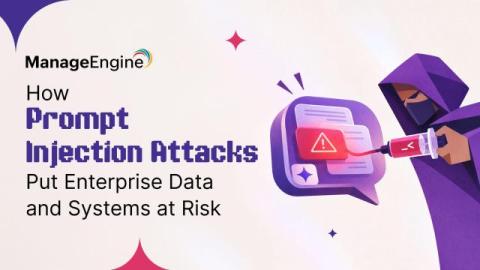
How Prompt Injection Attacks Put Enterprise Data and Systems at Risk

Enterprise AI is increasingly connected to sensitive data, business applications, APIs, and automated workflows. But the security controls surrounding these systems are not always keeping pace. IBM's 2025 Cost of a Data Breach Report found that 13% of organizations experienced breaches involving AI models or applications, and 97% of those organizations lacked proper AI access controls.