Security | Threat Detection | Cyberattacks | DevSecOps | Compliance

Healthcare Ransomware Attacks: Risks, Prevention, and Protection Strategies

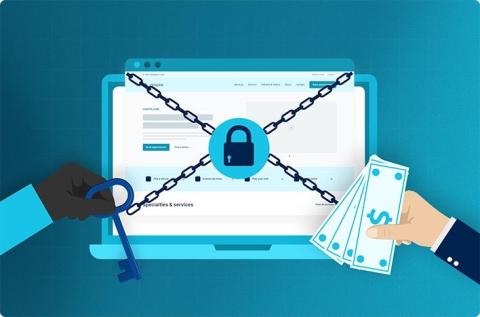
Ransomware attacks are on the rise, and no industry is safe. The motive behind such attacks is to encrypt confidential business data and demand a ransom to restore access. Many industries, including healthcare, experience ransomware attacks regularly. Patients’ records, critical operations, and life-saving systems are targeted by attackers. They can lock down data and systems within minutes, disrupting healthcare services.
LiteLLM compromised again: infostealer and RAT found in version 1.107.0

On October 21, 2026, version 1.107.0 of LiteLLM (a popular open source proxy that lets developers route requests across dozens of LLM providers) was found to be compromised by an attacker who injected malicious code into its published Python wheels on PyPI. The official Docker image for the same version is also compromised.

BRONZE SANDCASTLE deploys modified Meterpreter shells

The China-based threat group uses DLL sideloading in these attacks Counter Threat Unit (CTU) and SophosLabs researchers investigated a cluster of incidents attributed to the BRONZE SANDCASTLE threat group. The most distinctive technical marker for BRONZE SANDCASTLE is its consistent use of Sandboxie DLL sideloading.

Rubrik MSP Unscripted Episode 7 - Featuring Rajat Shah

In this episode of MSP Unscripted, Nawaz Ali sits down with Rajat Shah, Product Manager at Rubrik, to talk about the launch of multi-tenancy and what it means for managed service providers. Nawaz and Rajat discuss how shared infrastructure can help MSPs improve service economics while maintaining strong tenant isolation, expand opportunities across SMB and mid-market customers, and make services such as Backup as a Service, Disaster Recovery as a Service, isolated recovery environments, and advanced cyber recovery capabilities more scalable.

Report: Ransomware Attacks Involving Data Theft Are Surging

Ransomware attacks involving data theft have surged by 275% in 2026, according to a new report from Zscaler. Attackers exfiltrated more than 896.2 terabytes of data from victim organizations, more than seven times the amount stolen during the 2023–2024 reporting period.

The Video Game Market on Its Way to $300 Billion

According to industry experts, annual revenue in the gaming industry is projected to exceed $300 billion by 2028. This represents more than double the figures recorded in 2019. The key growth drivers remain the expansion of online services and the rapidly growing global player base. However, alongside money and audiences, the industry is also attracting those who seek to profit through illegal means.

Ep. 86 - Flax Typhoon Ran on 1,300 Scripts and a 12-Year-Old Bug Nobody Patched

Ten government agencies across seven countries put their names on one advisory. AA26-281A profiles Integrity Technology Group — a China-based, for-profit contractor that builds, sells and hosts the tooling behind large-scale intrusions, and whose domains the FBI seized on October 8. Tova Dvorin and Adrian Culley break down MicroScan’s 1,300 pentest scripts, the eBurst spray that tries ten interfaces into one Microsoft 365 mailbox, SoftEther VPN hiding behind trusted Windows process names, and a 12-year-old Bash CVE still exploited in the wild.

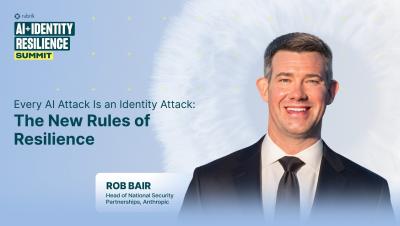
Rubrik AI + Identity Resilience Summit | Recap

AI is reshaping how we build and how we're attacked, often at the same time. If an agent can touch the data that runs your business, that data has to be recoverable. The Rubrik AI + Identity Resilience Summit brought together security leaders to answer one question: what does resilience look like when agents operate on both sides of the perimeter? From identity recovery to securing the agents inside your environment, every session is now available on demand.

Ep. 84 - ShinyHunters Leaked 5,000 Agents' Home Addresses Over One FBI Advisory

ShinyHunters breached FBIJobs.gov, leaked personal data on roughly 5,000 Bureau personnel—including 14 staffers tied to China-focused counterintelligence—and triggered arrests in Amsterdam and Jordan. We separate what the FBI confirmed from what the crew claimed: the unverified Oracle PeopleSoft zero-day, the vishing and OAuth token abuse behind 140+ breaches, and why the arrests wound the brand but not the playbook. Plus, the four controls worth validating this week, starting with FIDO2.

XWorm Malware: Worming Its Way From Entry to Exploitation

XWorm is a versatile modular malware that presents a multifaceted threat landscape. This malware can be employed for various malicious purposes, including remote access, data theft, ransomware delivery, and botnet creation. Despite being relatively new in the cyber threat landscape, XWorm has rapidly gained notoriety, largely due to its association with the DDGroup cybercrime group, renowned for its utilization of advanced malware techniques.

The first 72 hours of a ransomware attack: Why restored isn't recovered

You start the day with reports that your employees cannot access critical systems. A ransom note soon explains why: attackers have encrypted them and demand $2 million in bitcoin for a decryption key. Your team contains the attack and confirms that the backups are safe, yet this is only the beginning. Restoring your servers can take weeks, but recovering the business can take much longer.

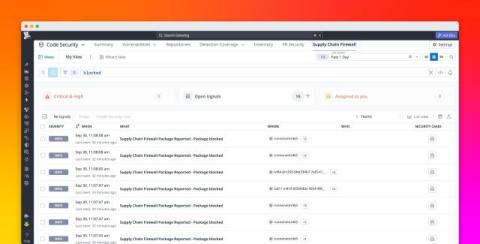
Block malicious packages across your organization with Supply Chain Firewall and Datadog Code Security

Campaigns such as Shai-Hulud 2.0 have demonstrated how quickly package malware can propagate through npm and then harvest credentials. Traditional dependency scanning can identify known risks in code once a package is added to the code, but security teams also need a check before installation.