Security | Threat Detection | Cyberattacks | DevSecOps | Compliance

Preparing for OMB M-26-14: How Datadog supports federal logging maturity

Memorandum M-26-14 from the Office of Management and Budget (OMB) marks a significant evolution in federal cybersecurity guidance, establishing a new risk-based framework for logging and network visibility across the United States federal government. The memo replaces the prescriptive requirements of Memorandum M-21-31 with an approach that emphasizes continuous monitoring, threat detection, investigation, and forensic readiness.

Datadog achieves GovRAMP High authorization

As state and local governments modernize critical technology systems, they must also meet growing demand for cybersecurity, reliability, operational efficiency, and fiscal accountability. From citizen services and public safety operations to transportation networks, education systems, and emerging AI initiatives, agencies are managing increasingly complex environments with limited resources.

Automatically enrich security logs with MITRE ATT&CK context before they reach your SIEM

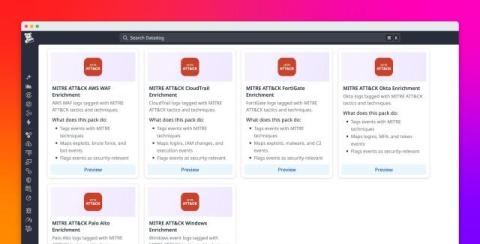
To detect and investigate threats, security teams need to collect telemetry data from identity providers, cloud platforms, web application firewalls, and endpoints. But these diverse sources describe the same tactics, techniques, and procedures (TTPs) differently according to their own vendor-specific language. For example, a failed Windows logon appears as an event ID, while an Okta account lockout appears as an identity event.

Securing the AI era: Outpace AI-powered attacks with unified security and observability

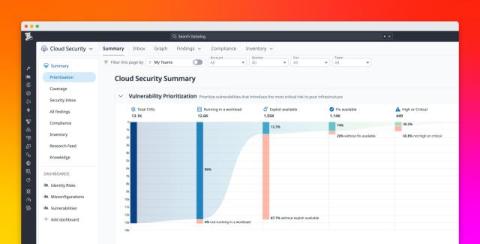
Security teams are dealing with a fundamentally different operating environment than they were a few years ago. AI-assisted development is rapidly pushing more code and infrastructure into production, and according to Datadog’s 2026 State of DevSecOps report, 40% of running services have an exploitable vulnerability.

Monitor Claude Enterprise activity with Datadog Cloud SIEM

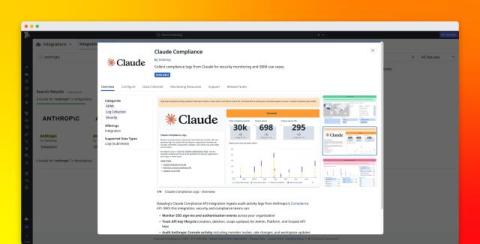
As Claude adoption expands across enterprises and workflows, security and compliance teams need to understand who is using Claude Enterprise, how it is accessed, and how it is administered and configured across the organization. The Claude Compliance API gives organizations access to valuable activity data that supports security monitoring, investigations, and governance initiatives.