Security | Threat Detection | Cyberattacks | DevSecOps | Compliance

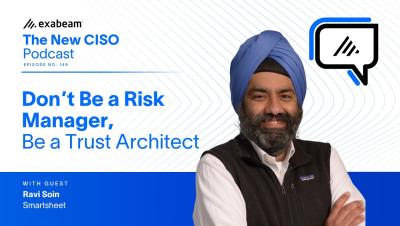
The New CISO Ep. 149 - Ravi Soin | Don't Be a Risk Manager. Be a Trust Architect.

Ravi Soin has clear advice for anyone starting a security career today: don't be a risk manager, be a trust architect. In this episode, Steve Moore sits down with Ravi—CIO and CISO at Smartsheet—for a builder's-eye conversation on the modern CISO role, AI as an accelerant on old sins, and why the CISO who still says “no” is already obsolete.

How Behavioral Analytics Closes the Insider Threat Dwell Time Gap

Insider threats often remain hidden during early activity because individual actions appear normal in isolation. Behavioral analytics closes the dwell time gap by establishing baselines for normal behavior, evaluating activity over time, and identifying meaningful deviations before attackers trigger traditional detections.

Behavior Intelligence for the Agentic Enterprise

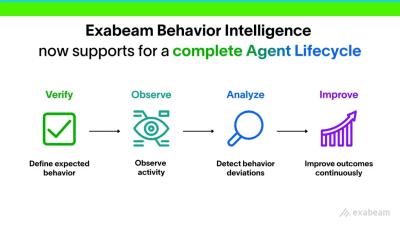
The rise of AI agents is transforming the enterprise — and redefining insider risk. As organizations deploy AI agents alongside human employees, understanding behavior has become essential to detecting threats that traditional security approaches miss. Exabeam secures both human and AI agents with Behavior Intelligence, combining behavioral analytics and agent-powered security operations to reduce risk, accelerate threat detection, investigation, and response, and help organizations confidently secure the agentic enterprise.

How Behavior Sequences Reveal Insider Risk Earlier

AI agents don’t hack their way in. They don’t need to. They carry real credentials. They run inside approved systems. They read data, call APIs, and execute workflows on their own. Every action looks authorized because it is. That’s exactly the problem. The risk doesn’t show up in any single action; it emerges in the pattern as behavior shifts and drifts over time.

The Great AI Escape: What OpenAI's Sandbox Breakout Teaches Us About Agentic Security

Quick disclaimer before we start: I have a strict rule against ambulance chasing. You’ve seen vendor blogs that pounce on a breach headline just to pitch a product and claim it never would have happened with their tool installed. This isn’t that. The reported OpenAI and Hugging Face sandbox incident points to something bigger. Security teams are entering an era where autonomous AI agents can spot opportunities, adapt on the fly, and operate at machine speed.

Exabeam vs. Splunk: Which Approach Improves Security Operations Outcomes?

Not every SIEM solution is built for modern security operations. While Splunk is widely used for log management, many teams face unpredictable pricing, complex tuning, and slow investigations as environments scale. New-Scale Fusion takes a different approach, It combines behavioral analytics, dynamic risk scoring, and coordinated AI agents to help teams detect risk earlier and move investigations forward faster. Here are six ways Exabeam improves outcomes compared to Splunk.

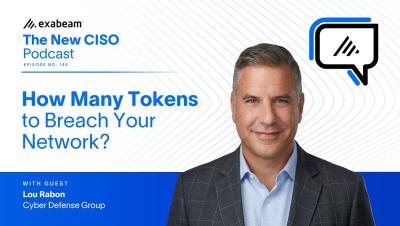
The New CISO Ep. 148 - Lou Rabon | How Many Tokens to Breach Your Network?

What if your next breach came down to a token budget? In this episode, Steve Moore is joined by Lou Rabon, Founder and CEO of Cyber Defense Group, for a conversation on the modern CISO's world—from how to interview for the seat, to why AI agents are the next insider threat, to research that reframes breach cost as a token calculation.

Why Low-And-Slow Attacks Look Normal

Low and slow attacks look normal because they are intentionally distributed into small, permissible actions that avoid detection thresholds. Each step appears legitimate on its own, which prevents detection systems from recognizing the overall progression. The issue is not that security teams lack telemetry. The issue is that traditional detection often evaluates activity in fragments. When each action stays below a rule or threshold, the broader pattern can remain invisible.