Security | Threat Detection | Cyberattacks | DevSecOps | Compliance

The Latest Cybersecurity News & Insights From Around The World



What is Pentest? A Complete Guide to Penetration Testing
A penetration testing or a pen testing is a simulated cyber attack on a computer system by ethical hackers to discover and exploit vulnerabilities, mimicking real-world attackers to assess an organization’s security posture across web apps, networks, apps, and APIs.
Building a Trust Center: A Complete Guide to Security Transparency
In today’s world, software buyers rarely proceed with a vendor relationship without a full understanding of the vendor’s security practices before entering into any type of arrangement. They require certifications, compliance reports, and data handling procedures in advance; consequently, adding security documentation requests, compliance attestation requests, and audit report requests are never-ending burdens on sales teams.
Trust Centers for Compliance: HIPAA, PCI DSS & SOC 2 Made Simple
Organizations in regulated industries must comply with strict guidelines that require continuous security measures and data protection protocols to be in place. Maintaining compliance in trust centers is becoming essential, as these organizations must demonstrate compliance with industry-specific regulations across their business relationships with clients and partners, as well as during audits. Trust centers for compliance metrics as a key framework for regulated companies to show compliance at scale.
How to Get RBI Certification: A Pentesting Playbook for Banks, NBFCs, and Fintechs (Astra Security)
If vulnerabilities were a currency, they’d be inflating faster than anything else in the world. According to Astra’s State of Continuous Pentesting Report, 5.33 new ones are discovered every minute, i.e., by the time you’ve finished this paragraph, dozens more doors have swung open for attackers.

Threat-Led Penetration Testing by Astra Security
Basic security audits won’t stop ransomware criminals who move faster than most teams can deploy patches, especially now, as supply chain attacks leverage trusted partners, and advanced persistent threats (APTs) hide undetected in networks for months. Fifty-two percent of organizations worldwide report at least one supply chain partner targeted by ransomware, putting their own networks dangerously at risk.

Autumn 2025 Product Updates: What's New at Astra Security
Security reviews are changing. More buyers want live, verifiable proof of your security posture and not a static PDF that changes by dawn. Astra Trust Center helps teams answer due diligence questions upfront, cutting back-and-forth questionnaires and keeping deals moving. At the same time, attackers aren’t getting more creative, just more effective. The 2025 Verizon DBIR found that 88% of Basic Web Application Attacks involved stolen credentials.

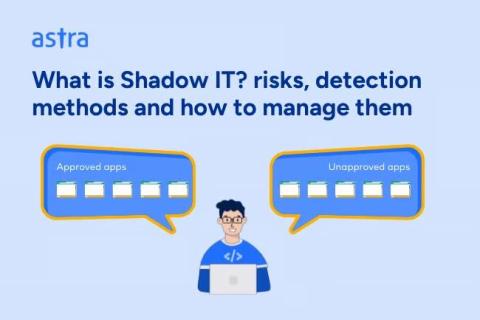
What is Shadow IT? Risks, Detection Methods & How to Manage Them
Today, with a rise of 48% in remote-first teams in the global workforce and generative AI, employees are increasingly bypassing IT for speed, exposing entire enterprises to the risk. Shadow IT now covers unauthorized SaaS, OAuth grant chains, shadow APIs, and even unapproved AI agents that process your most sensitive data without your knowledge. This guide answers what is Shadow IT?