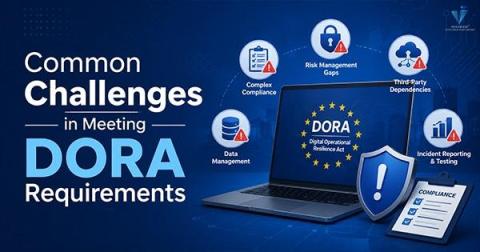
The Digital Operational Resilience Act is active. Yet most financial entities are still navigating significant implementation challenges. Here is what they are — and how to overcome each one.
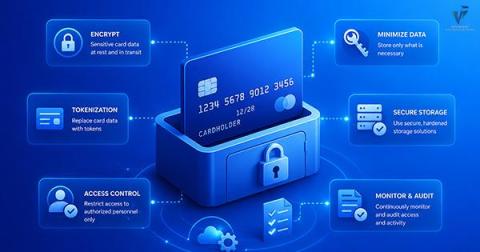
Businesses must never store CVV/CVC codes, full magnetic stripe data, or PINs under any circumstances. For PANs that must be retained, use AES-256 encryption with hardware security modules (HSMs) or, better yet, replace card data entirely with tokens via a PCI-DSS-compliant third-party vault. This removes raw card data from your environment and reduces your compliance scope from SAQ D (hundreds of controls) to SAQ A (as few as 22 controls).
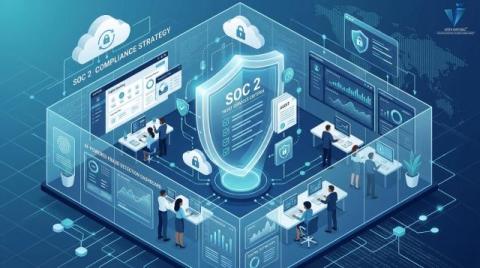
Rate this post Last Updated on June 8, 2026 by Narendra Sahoo Contents hide Why Fintech Companies Can No Longer Afford to Skip SOC 2 Type 2 What Is a SOC 2 Type 2 Report? (And Why Type 1 Is Rarely Enough) The Five AICPA Trust Services Criteria — Applied to Fintech Core SOC 2 Type 2 Audit Requirements for Fintech Companies The Practical SOC 2 Type 2 Audit Checklist for Fintech Companies Reading Your Audit Report: The Four Auditor Opinions Explained Frequently Asked Questions.
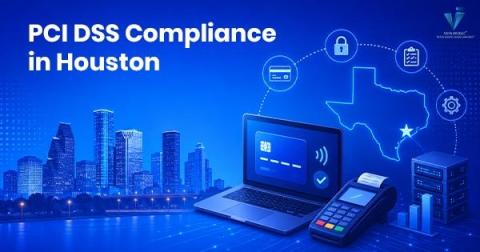
Houston is one of America’s most commercially active cities — a Fortune 500 corridor, a booming technology sector, and tens of thousands of small and mid-size businesses processing credit and debit card payments around the clock. Every one of those businesses is legally bound by a set of security standards that most owners know surprisingly little about: the Payment Card Industry Data Security Standard, universally referred to as PCI DSS.
Most developers have never heard of FreeType — but attackers are actively exploiting it right now. If your system is running an outdated version of this widely used font rendering library, you could be sitting on a critical vulnerability without even knowing it. In this video, we break it all down: What you'll learn.
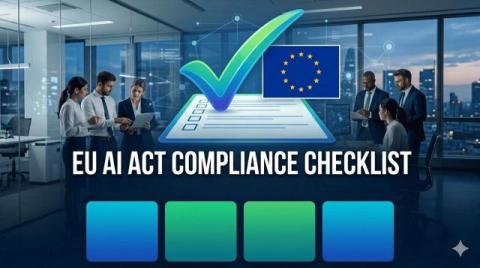
An EU AI Act compliance checklist is a structured framework that helps organisations systematically identify, classify, and govern all AI systems within scope of Regulation (EU) 2024/1689. It covers AI system inventory, risk classification (unacceptable, high-risk, limited, and minimal), conformity assessment requirements, technical documentation (Annex IV), human oversight obligations, GPAI model obligations, and post-market monitoring.
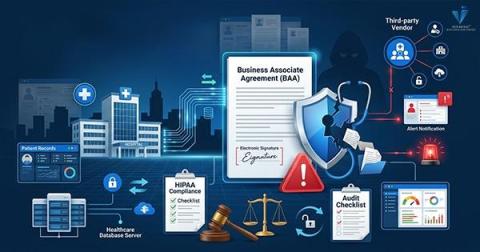
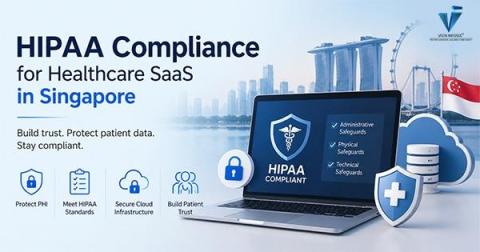
Rate this post Last Updated on May 11, 2026 by Narendra Sahoo Contents hide HIPAA Doesn’t Stop at the US Border Compliance by Design: Why Architecture Trumps Policy The Three Security Rule Safeguard Categories Engineering HIPAA Technical Controls Multi-Tenancy, Breach Notification, and Cross-Border Governance Cloud Security Operations: Keeping HIPAA Controls Alive The AI-Cloud Blueprint: HIPAA-Compliant AI in 2026 Frequently Asked Questions Conclusion: Build Compliance Into the Code.
PCI DSS controls are no longer just a compliance checkbox — they’re a mandatory security baseline that stands between your customers’ card data and sophisticated cybercriminals who are faster, smarter, and better-funded than ever before. According to the Nilson Report, global card fraud losses exceeded $33 billion in 2022 and are projected to surpass $38 billion by 2027.
Singapore’s financial sector faces its most demanding regulatory environment yet in 2026. AI-powered cyberattacks, cloud-native banking infrastructure, and decentralised finance have pushed the Monetary Authority of Singapore (MAS) to sharpen its supervisory focus — and its expectations of every regulated institution. If you are a CISO, CTO, Head of Compliance, or technology risk officer at a Singapore financial institution, this guide answers the question your regulators are already asking.