
Why Fibre Optic Networks Are Becoming the Backbone of Modern Security Infrastructure
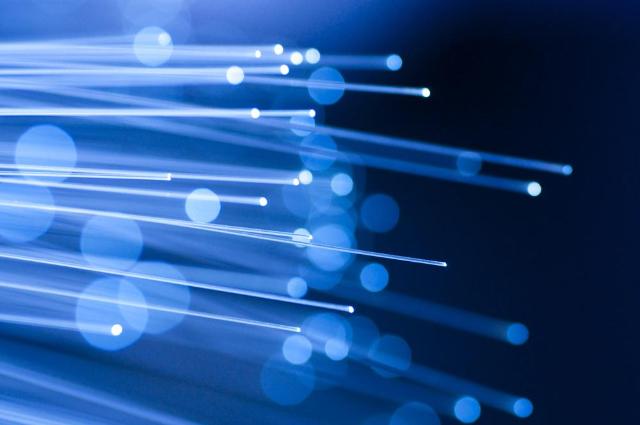
Image Source: depositphotos.com
The physical layer of your network is often the last thing security teams think about — until it fails. While most cybersecurity conversations focus on software vulnerabilities, zero-trust architecture, and endpoint protection, the cabling that carries all that data quietly underpins everything. And increasingly, that cabling is fibre optic.
Organisations upgrading their network infrastructure are discovering that fibre isn't just faster — it's fundamentally more secure, more resilient, and better suited to the demands of modern security operations than copper alternatives. Here's why fibre optic networks deserve a seat at the security strategy table.
The Basics: What Makes Fibre Different
Unlike copper cabling, which transmits data as electrical signals, fibre optic cables transmit data as pulses of light through strands of glass or plastic. That single distinction has enormous downstream implications for both performance and security.
Fibre is immune to electromagnetic interference (EMI), which means it won't degrade in environments with high electrical activity — industrial facilities, data centres, or any space running high-powered equipment. It also doesn't radiate a signal that can be passively intercepted the way copper does, making it significantly harder to tap without detection.
For organisations operating in regulated environments or handling sensitive data, that physical-layer security advantage is not trivial.
Physical Security and Tamper Detection
One of the underappreciated security advantages of fibre is how it responds to tampering. Because data travels as light, any physical interference with the cable — bending, cutting, or attempting to splice a tap — causes measurable signal degradation. Optical time-domain reflectometry (OTDR) testing can pinpoint exactly where a disruption has occurred along a cable run.
This makes fibre a natural fit for high-security perimeters and critical infrastructure. Organisations like Comnet design fibre optic transmission equipment specifically with these environments in mind — providing hardened solutions for the kinds of secure, long-distance signal transport that security-critical deployments demand.
Speed and Bandwidth: Removing the Bottleneck
Security tooling is data-hungry. SIEM platforms, XDR solutions, network traffic analysis tools, and threat detection systems all require high-throughput, low-latency connectivity to function effectively. A congested or slow network doesn't just create operational frustration — it creates blind spots.
Fibre optic networks deliver bandwidth that copper simply cannot match at scale. Multi-mode fibre supports speeds up to 100Gbps over shorter distances, while single-mode fibre can sustain those speeds across much longer runs. For organisations pushing large volumes of log data, telemetry, or video surveillance feeds across their infrastructure, fibre removes the throughput ceiling that would otherwise constrain those systems.
Long-Distance Runs Without Signal Loss
Campus-wide deployments, government facilities, and multi-building enterprise environments all share a common challenge: maintaining signal integrity over distance. Copper suffers significant attenuation over longer runs, which limits both the distance and the reliability of the connection.
Fibre doesn't have that problem. Single-mode fibre can carry signals tens of kilometres with minimal loss, making it the only practical choice for large-scale perimeter security deployments, outdoor camera networks, or any installation where cabling must span significant distances.
For organisations that have relied on copper for those runs, migrating to fibre often delivers an immediate improvement in both reliability and image quality for surveillance feeds.
Resilience and Business Continuity
Fibre is also more durable in challenging physical environments. It's resistant to moisture, temperature extremes, and corrosion in ways copper is not — an important consideration for outdoor runs or installations in industrial or coastal environments.
That said, no physical infrastructure is indestructible. Accidental cuts during construction work, cable pulls, or ground disturbances are among the most common causes of unplanned fibre outages. When they happen, the speed and quality of the repair response matters. Understanding your emergency fibre repair options before an incident occurs is an essential part of any business continuity plan — not an afterthought.
Integration with IP-Based Security Systems
Modern security infrastructure — IP cameras, access control systems, intercoms, intrusion detection hardware — is converging on the same network that carries your business data. That convergence puts new demands on network performance and reliability.
Fibre handles that convergence gracefully. A well-designed fibre backbone can carry security device traffic, operational data, and management communications without competition. It also simplifies future upgrades: as security technology continues to evolve toward higher-resolution cameras, AI-assisted analytics, and edge computing, fibre provides the headroom to accommodate those changes without a complete infrastructure rethink.
Planning a Fibre Deployment: What to Get Right
If your organisation is evaluating a fibre upgrade or greenfield fibre deployment, a few planning principles are worth keeping front of mind.
First, invest in quality from the start. The cost difference between standard fibre components and properly rated, industrial-grade hardware is small compared to the cost of remediation after a failure. Connectors, patch panels, and enclosures all matter.
Second, document everything. A clean, well-documented fibre plant with accurate cable records and splice maps is dramatically easier to troubleshoot and repair than one where documentation was treated as optional. This seems obvious but is frequently neglected.
Third, build in redundancy for critical runs. A single path between your security operations centre and your data centre is a single point of failure. Redundant routing is inexpensive relative to downtime.
Finally, establish a relationship with a qualified fibre contractor before you need one urgently. Knowing who to call at 2am after an accidental cut is not the time to be researching your options.
The Security Case for Fibre Is Only Getting Stronger
As threat surfaces expand and network demands grow, the physical layer of infrastructure deserves more strategic attention than it typically receives. Fibre optic networks offer a combination of performance, physical security, resilience, and longevity that makes them the natural foundation for serious security infrastructure.
The organisations that treat their network cabling as a strategic asset — rather than a one-time installation cost — are better positioned to support the security tools, monitoring systems, and operational capabilities that modern threat environments demand.