
The Hidden Security Risks of Mobile Workforce Applications in Field Operations
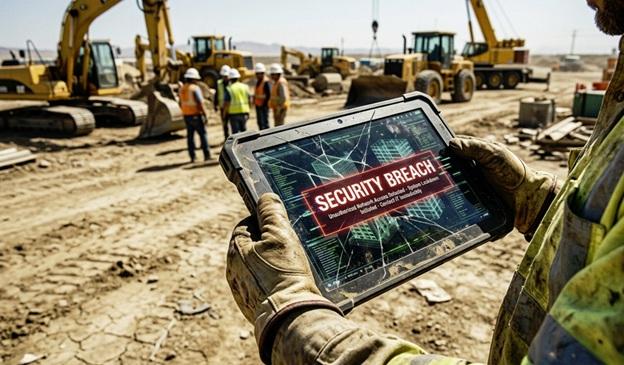
Mobile workforce applications are a $7+ billion market, forming the backbone of modern field service, but they are also becoming the primary targets of sophisticated cyberattacks. For a field technician, a mobile device is a tool, like a wrench or a multimeter, yet it holds the keys to your entire customer database and internal financial records.
The shift toward a distributed workforce has outpaced the security protocols meant to protect it. When teams operate out of vans rather than offices, the traditional "perimeter" of your business disappears. You are no longer defending a single building. You are defending dozens of moving targets that often rely on public Wi-Fi or outdated operating systems.
Security in the field is not just about passwords. It is about maintaining a tight grip on every digital interaction to ensure that a lost tablet doesn't become a corporate catastrophe.
Identifying The Vulnerabilities In Your Mobile Fleet
The most dangerous risk in field operations is the lack of visibility over mobile endpoints. Recent data indicates that 32.5% of devices on corporate networks currently remain unmanaged, creating massive "dark zones" where IT teams cannot see what is happening. This lack of oversight often leads to data leakage, where sensitive project details or customer addresses are cached on personal devices without encryption.
Mobile platforms that lack centralized control leave your business exposed to identity theft and unauthorized access. If your technicians are using fragmented tools to log hours or update job statuses, you lose the ability to audit who accessed what information and when.
Robust equipment and materials tracking through a unified, secure platform ensures that operational data remains encrypted, access-controlled, and centrally logged, rather than scattered across unverified third-party apps. Centralized systems do more than just simplify the workday. They create a "single source of truth" that makes it much harder for bad actors to inject malicious code or intercept outgoing data streams.
Field managers should prioritize several key security factors when evaluating their current mobile software:
- Standardized encryption for all data synced between the field and the office
- Multi-factor authentication requirements for every user login, regardless of location
- Remote wipe capabilities for any device that is reported lost or stolen
By implementing these standards, you close the gap between field efficiency and digital safety.
Modernizing Protection For Distributed Teams
The landscape of threats has evolved to include high-tech interceptions. We are now seeing emerging risks like NFC relay attacks and 5G signal interceptions that specifically target mobile fleets in high-density areas.
These aren't just theoretical problems for big tech companies. They are real-world issues for any business that sends employees into the field with a smartphone.
Hardening your mobile workforce starts with moving away from "paper-and-spreadsheet" hybrids. These manual processes are prone to human error and offer zero security logs.
A structured mobile platform consolidates workflows, leaving fewer "holes" in your digital fence. When every piece of equipment and every material update is logged through a secure portal, you gain an invaluable audit trail during a security review.
Operational oversight and cybersecurity are now two sides of the same coin. If you cannot track your assets in real-time, you cannot secure the data associated with them, nor can you hope to strengthen trust. Transitioning to an integrated mobile environment ensures your team stays productive without making your business an easy target for opportunistic digital theft.
Securing The Future Of Field Service Workflows
Protecting a mobile workforce requires a proactive mindset that treats software as a critical piece of infrastructure. As cyber threats become more automated, the only way to stay ahead is to use platforms designed with security at their core. This approach doesn't just protect your data. It protects your reputation with customers who trust you with their information every time a technician arrives at their door.
We have many other posts on our site exploring the importance of security in modern businesses across all industries, so stick around and learn more.