
AI-Written Phishing and BEC: Why Email Filters Miss It and What Actually Helps
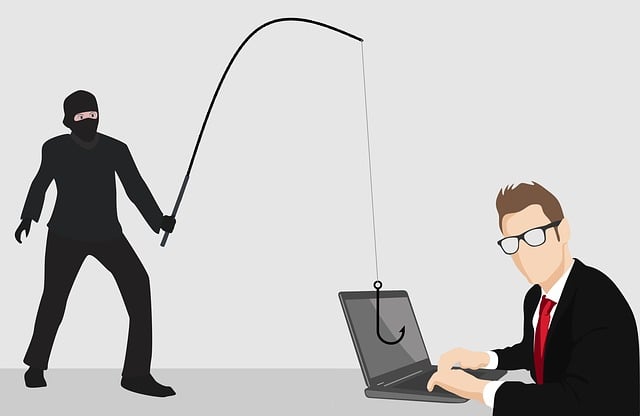
Your email security system does filter spam and other types of unnecessary and threatening emails. Still, you get some email scams in your inbox. These are basically called phishing or BEC.
If you hold a higher managerial position in an organization, these kinds of emails are extremely alarming. More concerning is that they can bypass your email security systems.
Nonetheless, there are more options and security systems you can use to control these emails.
But did you ever think about how, in spite of enforcing filters and security systems, these AI-written phishing and BEC emails get access to your inboxes?
This article will give you deeper insight into phishing and BEC, how they work, why they are not traceable by email filters, and what measures you can take to restrict them.
What Is Phishing And BEC?
As the name suggests, phishing is actually similar to fishing, where someone makes a trap and catches fish.
Phishing is a cyberattack where someone lures a person, under the guise of a reputable organization or person, to steal confidential information. The attackers mostly do it via email.
BEC (business email compromise) is an advanced trick where the attackers are masked under a seemingly authentic business email to specifically attack people with financial authority and access to sensitive business data.
These kinds of cyberattacks primarily target the accidental disclosure of passwords, bank account information, or other important data of your organization. Mostly, their purpose is to commit financial fraud and initiate unauthorized transactions.
To prevent and restrict these kinds of AI-written emails initially, you may use an advanced AI text detector, but you must take stronger and more impactful measures.
Reasons Why Email Filters Overlook Them
There are several reasons why traditional email filters miss them and cannot mark them as spam or a scam. But these are the common reasons.
Unique Text And New URL
Generally, email filters identify bad URLs and text that looks AI-generated and malicious. They also catch known domains that have been flagged as spam before. The filters read the linguistic inconsistencies and features that are usually seen in texts written by AI and mark them as spam.
But when it comes to phishing and BEC, AI produces unique texts and reshuffles URLs each time. Sometimes, they also send emails from a compromised account, which makes it impossible for filters to identify.
Human Intent
The filters are able to read the URLs, domain, and the language of an AI-written email. They cannot judge the purpose or the human intent behind it.
Specifically, the advanced BECs are so expert that they are not even suspicious.
The attackers search for individuals with certain interests using AI and target individuals so carefully. Moreover, AI tools use such language and tropes, considering that person’s actual interests, that even humans do not find them irrational or irrelevant.
So, this is another reason that email filters fail to restrict these sorts of AI-written BEC and phishing.
Avoiding Suspicious Link
Usually, email filters can identify malicious and unknown links inside an email that may take users to a malware download or a credential-harvesting page that are easily traceable.
But some BECs do not even attach such URLs or phishing or suspicious links. Rather, they use AI to write direct text and ask the user to provide wire transfer, invoice change, credentials, or bank routing number with proper instructions and steps.
Consequently, our email filters cannot flag them as harmful, and such BECs end up appearing in our inboxes, making us fall for the phishing bait.
Personalized Identity
Another cunning way that attackers adopt is that they use a very personalized identity and email address as the sender, which makes it look real. Naturally, the recipients will not consider it a suspicious email.
What is more dangerous is that attackers can use AI to generate and send emails referring to real names and deals by impersonating compromised accounts from LinkedIn.
So, users do not even doubt them as fake profiles. Rather, taking the email seriously, they follow their instructions and fall for the phishing.
Solution?
As the attackers and AI email writing tools have become this advanced, you must take more secure and solid measures as well to restrict these sorts of emails. Beyond AI detectors, you have to apply the following strategies.
Restriction On Financial Actions
The most effective measure specifically to restrict BEC is to put strong restrictions on emails with all kinds of financial actions, like wire transfers or payment details exchanges.
Better to implement a hard freeze on payment changes via email only, and ensure that no financial actions are executed without a second authentication process or approval workflow.
This one step alone can prevent the BEC from fulfilling their purposes.
Enforce High-Security Authenticator
Another very impactful way to get rid of phishing and BEC is implementing multi-factor authentication and FIDO.
By implementing MFA, you can strictly control how all of your passwords, confidential numbers, and credentials are being used and accessed. When you enforce MFA, if any of your passwords get stolen, the attacker will still need to go through a second authentication.
FIDO (Fast Identity Online), or FIDO2 (an improved version of FIDO), is an open authentication standard that is designed to prevent phishing and BEC. The process implements phishing-resistant cryptographic credentials to verify user identities.
FIDO immediately replaces traditional passwords with passkeys on your devices whenever there is a threat of data leakage.
Thus, it prevents possible damages to heppen even if hackers get successful to steal important data about your bank accounts or organization.
Flag Anomalies
This is a very fundamental strategy to stop phishing and BECs from reaching you. Flag all kinds of irregularities that appear in emails.
Along with first-time senders and strange email addresses and profiles, identify unusual requests, seemingly abnormal text and language, logins from impossible locations and IP addresses, and atypical vendors.
This way, you can prevent prospective phishing and BECs in the initial phase.
Behaviour-based Filtering
Discussing anomalies and unusual email addresses, here is the next point to note before trusting a sender.
You may have received emails from an email address before, but keep in mind that attackers can impersonate compromised profiles as well. So, always examine whether the text or the language, request, and thread fit the sender’s usual behaviour.
If you can be sure that this sender is not supposed to use certain language or make certain requests, you may consider it phishing.
Final Thought
The modern form of online thieving: AI-generated phishing and BEC have become extremely cunning and active these days.
You may be very cautious and attentive while you read your e-mails and messages. Still, you can get scammed through multiple channels and robbed.
To prevent this digital fraud, you must enforce some authentication processes and the necessary measures mentioned above and ensure that they are properly implemented.