
5 Key Benefits of Investing in Custom Control Room Consoles
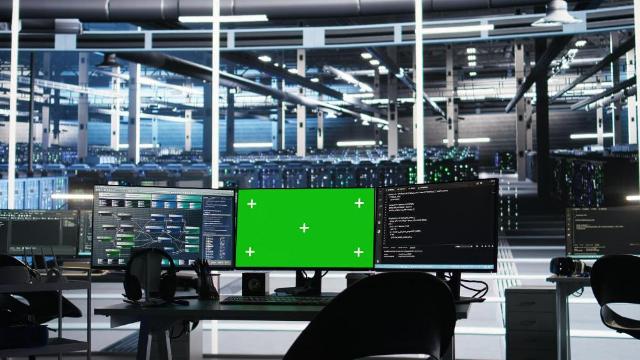
Designed by Freepik
Mission-critical operations don't wait. A utility grid goes down, a security breach unfolds, a transportation incident cascades, and the people in the room have seconds, not minutes, to respond correctly. That's the reality operators face every single shift. And here's something worth sitting with: the workstation they're sitting at either helps or hurts that response.
Custom control room consoles aren't just furniture with a fancier price tag. They're operational infrastructure, the physical layer that determines whether your team can think clearly, move efficiently, and sustain performance across a full shift cycle. If decision-makers in your organization are still thinking of consoles as a line item under "office furnishings," this article is for you.
Why Custom Control Room Consoles Outperform Standard Furniture
Let's be direct: generic office desks were designed for people working eight-hour days, answering emails, and attending meetings. They weren't designed for operators managing dense monitor arrays, heavy cable loads, and sustained cognitive pressure across back-to-back shifts.
Standard furniture degrades fast in always-on environments. Drawers buckle. Cables tangle into hazards. Surfaces warp under sustained equipment weight. None of this is a matter of misuse; it's a matter of misfit. Purpose-built ergonomic control room furniture solves these problems structurally, not as a workaround.
Environments Where the Performance Gap Is Most Visible
According to DataPath, 76% of control room operators report experiencing moderate to high fatigue during or after their shift, up from 58% in 2020. That's not a wellness statistic to file away. That's an operational risk signal demanding a structural response.
Network operations centers, dispatch hubs, air traffic coordination rooms, CCTV monitoring facilities, and industrial process control environments are the settings where the difference between well-designed control room workstations becomes measurable.
Investing in custom control room consoles delivers measurable advantages in performance, efficiency, and long-term scalability, especially in mission-critical environments. Solutions built around the AEGIS control room console are engineered to streamline deployment while maintaining high functionality. This approach allows organizations to move from design to installation much faster without sacrificing quality.
These consoles are built with modular structures that support future upgrades, integrated cable management for cleaner and safer workspaces, and ergonomic designs aligned with ISO 11064 standards to enhance operator comfort and reduce fatigue during extended operations.
With that context established, here are five concrete benefits that make investing in purpose-built consoles a defensible, high-return decision.
Benefit 1 – Superior Ergonomics That Protects Operators and Performance
Discomfort doesn't stay quiet. It accumulates shift by shift, compresses into chronic strain, and eventually shows up as missed alarms, slower reaction times, and operators calling in sick or quitting altogether. Ergonomic control room furniture isn't a perk. It's a performance requirement.
Operator-Centric Design Features That Actually Matter
Well-built operator consoles include motorized sit-stand height adjustment, optimized monitor arm positioning, correct keyboard and mouse reach distances, and proper foot clearance. A sit stand console lets operators shift posture throughout their shift without breaking their workflow, which directly reduces musculoskeletal buildup over time.
Impact on Alertness, Error Rates, and Safety
Fatigue degrades judgment. In alarm-heavy, high-stakes environments, that degradation has a cost. Missed alerts. Delayed escalations. Compounding errors across a full shift cycle. Designing control rooms with ergonomics as a foundational requirement, not an optional upgrade, materially reduces these risks.
Designing for a Multi-Generational Workforce
Custom consoles can be configured with ADA-compliant clearances, adjustable reach ranges, and controls that accommodate diverse body types and age ranges. That flexibility supports inclusive hiring and helps retain experienced operators who might otherwise leave simply because the physical environment stopped working for them.
Benefit 2 – Optimized Workflow, Collaboration, and Situational Awareness
Individual ergonomics matter. But so does the room. The way workstations are arranged relative to one another, to video walls, to supervisor stations, that geometry has a direct effect on how quickly your team can coordinate and respond.
Layouts That Follow the Work, Not the Floor Plan
Control room console desk placement should reflect how your team actually communicates, escalation paths, shared task patterns, and sightline dependencies. When operators have unobstructed views of alarm displays and video walls, decision-making accelerates because the environment is structured to support it.
Research from Security Magazine found that implementing a unified platform led to quicker incident response for 59% of teams and reduced tool maintenance time for 53%. Purpose-built command center consoles replicate that kind of unification at the physical layer, one clean, integrated surface instead of a chaotic accumulation of stacked equipment and improvised setups.
Integrated Technology That Reduces Cognitive Load
Built-in cable routing, zoned work surfaces, and integrated KVM and radio support mean operators spend their attention on their responsibilities, not on managing their environment. Good control room desk furniture keeps the most-used tools where they belong: within reach, without clutter.
Supporting Real-Time Collaboration and Incident Management
Curved or clustered console configurations make "war room" responses to major incidents far more natural. Supervisor pods with direct visibility into key operator positions enable faster oversight without disrupting the primary operator's focus. That structural support can make a real difference when seconds matter.
Benefit 3 – Long-Term Cost Savings and Measurable ROI
This is where a lot of organizations get the math wrong. A custom console looks expensive up front. But when you run the numbers across its actual lifespan, and against the costs of what inadequate workstations create, the return is hard to argue with.
Reduced Turnover, Absenteeism, and Training Costs
Musculoskeletal disorders account for 27.7% of all serious work-related injuries and illnesses in private industry, nearly 488,040 serious cases annually. Ergonomic control room furniture that encourages posture variability and proper reach distances directly reduces these risks. Fewer injuries mean fewer sick days, lower workers' compensation exposure, and reduced turnover in already difficult-to-fill roles.
Lower Total Cost of Ownership
Standard office furniture wasn't engineered for continuous use. Purpose-built control room consoles use cold-rolled steel frames, commercial-grade surfaces, and modular components that hold up under 24/7 loads. That durability translates to fewer replacements, less downtime, and more straightforward maintenance over a decade-plus lifespan.
Avoiding Expensive Retrofits
Under-specified consoles become painful problems when your technology or team structure changes. Modular control room solutions built for reconfiguration spare organizations from full rebuild costs when screens get added, software evolves, or headcount grows.
|
Investment Factor |
Standard Office Furniture |
Custom Control Room Console |
|
24/7 Durability |
Low |
High |
|
Cable Management |
Minimal |
Integrated |
|
Ergonomic Adjustability |
Limited |
Full Range |
|
Technology Scalability |
Poor |
Modular/Expandable |
|
Lifespan in Mission-Critical Use |
2–4 Years |
10–15+ Years |
Benefit 4 – Future-Ready Flexibility for Evolving Technology
Technology refresh cycles aren't slowing down. If your consoles can't adapt, your only option is replacement. That's a costly way to stay current. Modular custom control room consoles protect your investment by adapting a design feature, not a crisis response.
Modular Designs That Grow With Your Systems
Add-on bays, removable panels, and adjustable rails absorb new PC hardware, expanded display configurations, and additional workstation positions without demanding a full room rebuild. That adaptability is especially valuable when operations scale or teams merge.
Built-In Infrastructure for a High-Density Environment
Dense multi-monitor setups generate heat and demand structured power and data routing. Purpose-built consoles handle this through integrated cable management channels, structured power distribution, and thermal-aware equipment placement, protecting hardware longevity and keeping the environment safe for operators.
Supporting Digital Transformation and Hybrid Operations
Modern control room console designs can incorporate cameras, microphones, and collaboration tools directly into the furniture itself. When hybrid or remote operations become standard practice, and for many organizations, they already have, that preparedness means no costly retrofit scramble.
Benefit 5 – Enhanced Security, Compliance, and Brand Image
Here's a dimension that often gets overlooked in console conversations: what the room signals to the people inside it and the people walking through it. Purpose-built consoles do more than perform; they project.
Physical Security by Design
Locking CPU bays, concealed cabling, and tamper-resistant panels are built into purpose-built control room consoles from the start. These aren't policy workarounds; they're structural features that separate secure from accessible by design.
Supporting Industry Standards and Regulatory Requirements
Utilities, oil and gas, transportation, and security sectors each carry specific documentation and design requirements around ergonomics, egress, and cable safety. Custom console design addresses these systematically rather than through compliance patches applied after the fact.
Professional Appearance That Reinforces Organizational Culture
A cohesive, intentionally designed control room influences how operators feel about their work and how leadership and external stakeholders perceive the operation. Thoughtful materials, integrated lighting, and consistent branding signal that the organization genuinely takes its mission seriously, and that signal matters.
Turning Your Control Room Into a Strategic Asset
Five benefits, and one thread running through all of them: the people in the room deserve an environment that's actually built for what they do. Ergonomic control room furniture, intelligent layouts, durable construction, modular flexibility, built-in compliance, these aren't aspirational extras. They're the practical foundation of a control room that performs when it needs to most.
If your current environment wasn't designed with these factors in mind, there's no better time to start the conversation than before your next technology refresh or staffing change forces it. A design consultation or control room audit can surface your biggest opportunities, and give you a clear picture of what's possible when the room is finally built around the work.
Common Questions About Custom Control Room Consoles
Are custom control room consoles really necessary for smaller operations?
Smaller teams still benefit from purpose-built ergonomics and clean cable management. Scaled-down modular options deliver the core advantages of custom control room consoles, adjustability, durability, and integrated technology support, without requiring a large-facility budget.
How long do high-quality control room consoles typically last in a 24/7 environment?
Well-built consoles with steel frames and commercial-grade surfaces typically last 10 to 15 years or more. Modular designs stretch that lifespan further because individual components can be upgraded independently.
Can custom control room consoles be retrofitted into an existing space without a full remodel?
In most cases, yes. Modular systems are specifically designed to work within established room footprints and existing infrastructure without requiring a complete rebuild.
What's the typical cost range per operator position for custom consoles?
Costs vary based on adjustability features, integrated technology, materials, and compliance requirements. Entry-level custom positions may start around $5,000–$8,000, while high-performance positions with full motorization and integrated equipment can reach $20,000 or more.
How far in advance should control room console planning begin?
Planning should begin 9 to 12 months before a facility goes live. Early engagement with console manufacturers allows meaningful coordination with architects, MEP engineers, and systems integrators, preventing the kind of costly design conflicts that surface too late to fix cheaply.