Security | Threat Detection | Cyberattacks | DevSecOps | Compliance

The MemcycoFM Show: Episode 6 - Pre-emptive Account Takeover Detection: A Five-Step Guide

Modern security leaders know that account takeover detection (ATO) isn’t just about spotting a bad login. ATO attacks are part of a broader scam lifecycle – starting with phishing or impersonation, escalating into credential harvesting, and ending with unauthorized access. To stop ATOs effectively, security teams need visibility into this full progression, not just the login attempt. That’s why a true ATO prevention strategy starts long before a password is entered.

The MemcycoFM Show: Episode 5 - DNS Cache Poisoning Prevention: How to Protect Accounts in Real-Time

For security teams, it’s no great revelation to say that DNS cache poisoning prevention is essential for guarding against attacks using that vector. But it’s easier said than done. While traditional network-layer defenses like DNSSEC reduce poisoning risk, they can’t fully prevent it. Downstream – after redirection – bad actors await, ready to harvest credentials, bypass MFA, and take over accounts.

The MemcycoFM Show: Episode 4 - How to Prevent Credential Stuffing Attacks

Credential stuffing attacks are one of the most persistent and damaging account-based threats facing security teams – and one of the hardest to detect. Most enterprises rely on server-side, post-login detection, which captures only successful login attempts. Failed attempts remain invisible, slowing time-to-detection and increasing the risk of successful account takeovers (ATOs). Why is this such a challenge? The reasons are many, as we’ll explore.

The MemcycoFM Show: Episode 2 - How to Choose the Best Domain Takedown Service

If you’re searching for the best domain takedown service, chances are your brand has already been impersonated, or you’re proactively trying to stop that from happening. Either way, you know the stakes: malicious sites that mimic your brand can destroy trust, harvest credentials, and cost your business real revenue. Of course, ‘best’ depends on your threat landscape and internal priorities. This episode breaks down what actually matters so you can choose the right fit for your needs.

The MemcycoFM Show: Episode 3 - Memcyco Recognized in Datos Insights' 2025 Fintech Spotlight Report

The battle for digital trust is intensifying. Fraudsters are no longer lone actors, they’re industrialized operations, using AI-driven phishing kits and Phishing-as-a-Service models to exploit businesses and their customers at unprecedented speed. In this environment, traditional fraud defenses are collapsing under the weight of innovation they weren’t designed to face.

The MemcycoFM Show: Episode 1 - Disrupting AI-Powered Phishing, What CISOs Must Do Now

Welcome to the inaugural episode of our sparkling new podcast, The MemcycoFM Show. Your new go-to for everything digital deception, brandjacking, and real-time cybersecurity defense. In our first episode, two of our own Memcycans discuss why AI-powered phishing is changing the threat landscape and what CISOs must do to stay ahead. Powered by Memcyco’s mission to protect trust in the digital world.

Fintech Newscast Episode 253 with Memcyco

Security, growth, and valuations — all packed into one powerful episode. Memcyco CEO Israel Mazin sat down with Fintech Newscast to explore the evolving cyber threat landscape and how startups can stay ahead of the curve. From founding a security company to navigating today’s investment climate, it’s a must-listen for anyone in fintech. Stream the full convo on the Fintech Newscast!

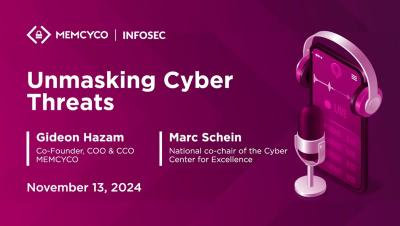
[Podcast] ChattinCyber's Unmasking Cyber Threats: The Rise of Spoofing + Phishing with Gideon Hazam

Marc Schein is chattin’ with Memcyco's Gideon Hazam in ChattinCyber's latest episode. The conversation provides valuable insights into the challenges posed by spoofing and phishing attacks, the connection between the two, and the need for robust authentication measures to protect against these threats. The discussion highlights the importance of detecting attacks quickly, identifying at-risk users, and implementing effective protection measures to safeguard organizations and their customers.