

Security | Threat Detection | Cyberattacks | DevSecOps | Compliance

What It Takes to Build AI Analysts You Can Trust

Building reliable AI agents for cybersecurity requires more than powerful language models. It involves solving three interconnected engineering challenges: scalability, trust, and safe execution. By combining frontier models with cost-efficient alternatives, caching, and prompt optimization, organizations can make large-scale security investigations economically sustainable.

USDA Breached via Critical Farm Payment System Vulnerability

The USDA cyberattack forced critical systems offline, highlighting how broad containment measures can disrupt operations when teams lack precise visibility into real threats. Rather than relying on blanket shutdowns or patching, organizations need to quickly identify which assets are genuinely exploitable and take targeted action. Seemplicity’s AI Exposure Response capabilities enable teams to validate exploitability, identify affected systems, and automate remediation.

PHP Vulnerability Today: Where Things Stand and What to Do Now

Modern exposure management has evolved beyond vulnerability scanning and alert volume into a discipline focused on measurable risk reduction. As the exposure management market matures, security leaders are adopting cyber exposure management platforms that unify signals across vulnerability, cloud, application, and attack surface tools to prioritize what truly matters.

PHP Meaning: What PHP Stands For and Why It's in the Security News

hp? PHP stands for “PHP: Hypertext Preprocessor,” a recursive acronym that originally meant “Personal Home Page.” It’s a server-side scripting language that runs on web servers and generates the pages browsers display, powering platforms like WordPress, Drupal and Laravel. PHP is in the security news because of PHP2Shell and other critical 2026 flaws in PHP itself, which affect every app running on a vulnerable version until it’s patched.

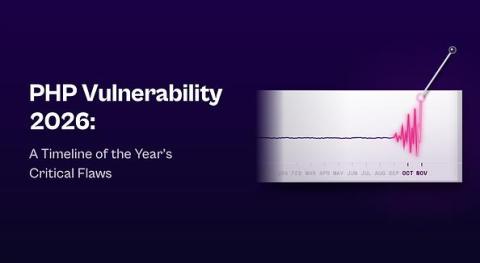
PHP Vulnerability 2026: A Timeline of the Year's Critical Flaws

PHP disclosed nine critical vulnerabilities in 2026, all rated 9.2. The first two, known as PHP2Shell (CVE-2026-109618 and CVE-2026-109619), were patched on October 21 and are actively exploited. The other seven were fixed on November 19, including phpAfterShell (CVE-2026-126714), with no confirmed exploitation so far.

PHP Critical Vulnerability: What You Need to Know in 2026

Multiple critical PHP vulnerabilities disclosed in 2026, including remote code execution flaws, have put PHP-based applications and servers at risk. Organizations should identify affected PHP versions, assess exploitability and exposure, apply the latest security patches, and verify remediation. Understanding which systems are actually at risk helps security teams prioritize their response and reduce exposure more effectively.

Java4Shell (CVE-2026-114938): How to Find and Fix Exposure

Java4Shell (CVE-2026-114938) is a reported unauthenticated remote code execution flaw in OpenJDK 17.0.6 and later, rated 9.2 under CVSS 4.0. Early analysis ties it to memory corruption in Java’s AVX-512-accelerated Base64 decoder, so exposure depends on the Java version, the CPU and whether attacker input reaches the vulnerable code. Find every Java 17 runtime, confirm which ones are exploitable, contain those, and apply your vendor’s fixed build as soon as it’s available.

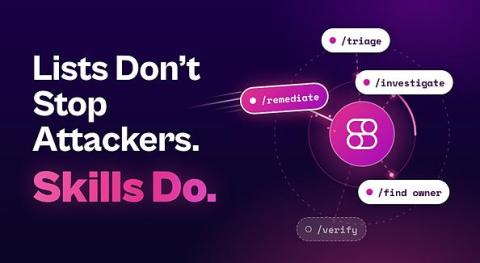
Lists Don't Stop Attackers. Skills Do.

Traditional exposure management identifies and prioritizes risks, but leaves investigation and remediation to already stretched security teams. Seemplicity’s AI Exposure Response changes that with AI analysts powered by specialized skills that replicate expert security judgment at machine speed. They validate exploitability within your environment, contain real threats, drive remediation, and verify results, all within a controlled, auditable framework. The result.

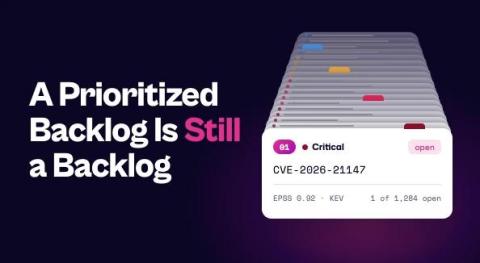
A Prioritized Backlog Is Still a Backlog

Vulnerability prioritization helps security teams identify what matters most, but it doesn’t actually resolve exposures. Even with better visibility, deduplication, and risk-based context, vulnerabilities remain unresolved until teams investigate, remediate, and verify the fixes. Real risk reduction isn’t about how efficiently you organize your backlog. It’s about how quickly you take action to shrink it.

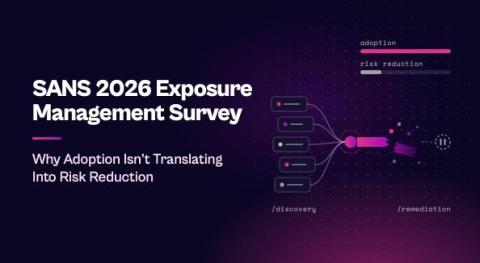
SANS 2026 Exposure Management Survey

The SANS 2026 Exposure Management Survey reveals a significant gap between adoption and effectiveness. While 91% of organizations have implemented exposure management, only 7% operate continuously, and just 15% report significant risk reduction. The biggest challenges aren’t a lack of security tools, but fragmented exposure data, incomplete asset visibility, unclear remediation ownership, and manual workflows.