Security | Threat Detection | Cyberattacks | DevSecOps | Compliance

Dirty Frag Vulnerability (CVE-2026-43284 & CVE-2026-43500): Why Reliable Linux Privilege Escalation Changes the Defense Equation

Dirty Frag (comprising CVE-2026-43284 and CVE-2026-43500) is a high-impact Linux kernel vulnerability chain that enables deterministic, reliable local privilege escalation (LPE) to root across major enterprise distributions. Unlike previous race-condition exploits, this logic flaw in the IPsec ESP and RxRPC subsystems offers a near 100% success rate, allowing attackers to escalate from a minor foothold to full system control without triggering typical kernel panics.

"Copy Fail" Vulnerability (CVE-2026-31431): Linux Kernel Privilege Escalation

CVE-2026-31431— the “Copy Fail” vulnerability—is a critical local privilege escalation (LPE) flaw in the Linux kernel’s cryptographic subsystem that allows unprivileged users to gain root access with near-perfect reliability. Boasting a CVSS score of 7.8 and affecting nearly every mainstream distribution since 2017 (including Ubuntu, RHEL, and Amazon Linux), Copy Fail has been added to the CISA KEV catalog due to its active exploitation and portable, low-footprint nature.

Proving Zero Trust in Practice: Continuous Validation for Segmentation and Lateral Movement Defense

SafeBreach Senior Product Marketing Manager Tova Dvorin explores the critical necessity of continuous validation in Zero Trust architectures, specifically focusing on the integration of SafeBreach and Akamai Guardicore. While microsegmentation is a foundational element in the defense against lateral movement and ransomware propagation, dynamic infrastructure and policy drift often create “blind spots” that compromise security posture.

SafeBreach's Evolution into an AI-First Development Team: Part 2

In this second installment of a series on the transformation of SafeBreach’s development organization, VP of Development Yossi Attas details a structured operational workflow that integrates Jira, BitBucket, and Claude Code to turn AI usage from ad-hoc prompting into a rigorous engineering methodology.

Engineer Custom Attack Validation at Scale - with the Developer-First VS Code Workflow for Breach Studio

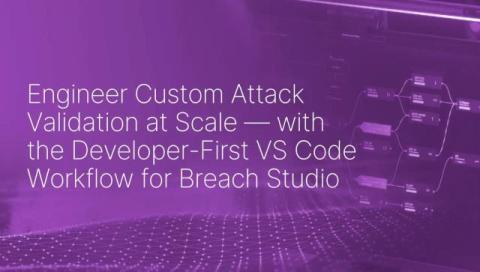
The new SafeBreach extension for VS Code integrates Breach Studio’s powerful custom attack development capabilities directly into the world’s most popular IDE to enable security teams to engineer custom attack simulations with unprecedented speed and precision. Security engineers can leverage Git-native version control, AI-assisted authoring, and real-time IntelliSense linting to eliminate friction and reduce failed executions.

EventLog-in: Propagating With Weak Credentials Using the Eventlog Service in Microsoft Windows (CVE-2025-29969)

While attackers often find low-privileged credentials after creating a process dump of LSASS or harvesting hashes with a tool like Responder, they are rarely able to do anything with those credentials (RDP aside). We set out to discover how malicious actors might exploit Microsoft Windows remote procedure call (RPC) protocols to gather data remotely as a low-privileged user using RPC as an attack surface.