Security | Threat Detection | Cyberattacks | DevSecOps | Compliance

Extortion Groups are Impersonating Help Desks to Gain Initial Access

Researchers at ReliaQuest have observed a surge in voice phishing (vishing) and Microsoft Teams phishing over the past several months, particularly from extortion groups like ShinyHunters. “Attackers overwhelmingly targeted users and their unmanaged devices to gain access to accounts,” the researchers write.

Identifying Candidate Fraud in Remote Hiring: 10 Red Flags HR Teams Should Know

The rise of remote work and generative AI has triggered a sharp increase in sophisticated recruitment scams. HR teams now face a landscape where identifying candidate fraud is a complex challenge, as fraudsters use deepfakes and stolen identities to bypass traditional screening methods. Implementing robust recruitment and HR services is essential to mitigate these risks effectively.

Warning: Attackers Are Tricking Employees Into Sharing Malicious Calendar Invites

Researchers at Fortra are tracking a new variant of calendar phishing in which threat actors trick employees into sharing meeting links internally. The attackers pose as prospective customers and contact non-sales employees, asking to be directed to a sales representative in order to discuss a business opportunity. The attacker then sends the employee a meeting link to forward to a sales contact. The attack takes place as follows.

The Price of a Deal: How Scammers are Hijacking Amazon Prime Day

As millions of shoppers prepare their wishlists and await discounts for Amazon’s Prime Big Deal Days starting October 6, cybercriminals are gearing up for their own payday. In the weeks leading up to major shopping events, Amazon impersonation campaigns reach an annual peak.

Why academic selfie fraud benchmarks fail in the real world

Academic deepfake datasets rarely static: generate an image, label it real or fake, done. Real-world fraud doesn't hold still. Zhaofeng Si, a PhD student at University at Buffalo and research scientist intern at Persona, breaks down the gap. Public academic datasets are mostly typical face swaps and diffusion-model-generated images with a fixed label. In the real world, there's an attack-and-defense loop. Fraudsters actively probe for ways to bypass detection, so defenses have to keep adapting instead of training against a static benchmark.

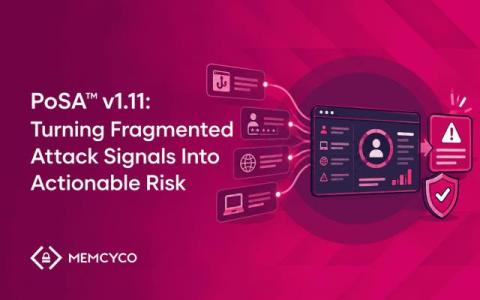
PoSA v1.11: Turning Fragmented Attack Signals Into Actionable Risk

With PoSA v1.11, we focused on a practical problem: detecting more attack activity does not necessarily help fraud and security teams make better decisions. PoSA already identifies activity across digital impersonation, credential theft, attacker devices and account access. The challenge is making the connections between that activity easier to understand, identifying which users and devices require attention, and making that intelligence available to the systems and teams responsible for responding.