Security | Threat Detection | Cyberattacks | DevSecOps | Compliance

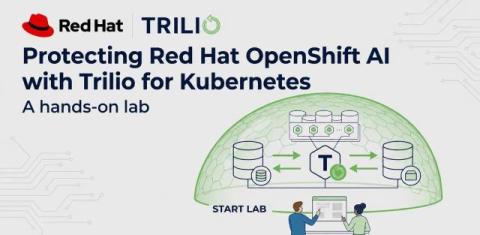
Protecting Red Hat OpenShift AI with Trilio for Kubernetes: a hands-on lab

A few weeks ago I was on a call with a financial services customer who had moved a credit-decisioning model into production on Red Hat OpenShift AI. They were happy with the platform. They were less happy with the answer they had for a question their risk officer had just asked: “If an attacker encrypts the cluster tomorrow, what do we need to bring back to be inference-ready by Monday morning?” The team started listing the obvious things — the model artifact, the serving endpoint.

Data Localization: What It Is and Why It Matters

Every time a user submits a form, uploads a file, or completes a transaction, that data has to live somewhere, and governments increasingly want that “somewhere” to be within their own borders. Data localization has moved from a niche regulatory concern to a core infrastructure decision for any organization operating across jurisdictions.

Mirantis OpenStack: A Practical Guide to Operations

Most teams can get OpenStack running, but keeping it running without burning out your engineers is the harder problem. Mirantis OpenStack packages upstream OpenStack with the validated builds, deployment tooling, and vendor support that platform teams need for stability. With Mirantis OpenStack for Kubernetes (MOSK), the architecture goes even further.

RPO in Disaster Recovery: What It Means and Why It Matters

Your database crashes at 2 PM, but your last backup ran at midnight. That’s 14 hours of lost transactions, customer records, and operational data. The gap between your last usable backup and the moment disaster strikes is exactly what the recovery point objective (RPO) defines. Most organizations don’t think seriously about it until they’re already staring at the damage. RPO in disaster recovery planning determines whether you lose five minutes of data or five days of it.

The VMware Exodus, the DR Gap It Exposed, and Why We Built Trilio Site Recovery to Fill It

Something significant is happening across enterprise IT right now — and I do not think it has been fully reckoned with yet. More than 5,000 organizations are actively evaluating or executing a migration away from VMware. The Broadcom acquisition changed the economics of VMware dramatically and abruptly. Licensing costs surged. Bundling decisions eliminated flexibility.

Data Sovereignty vs. Data Residency: Key Differences Explained

Storing data in a specific country doesn’t automatically mean that that country’s laws are the only ones that apply. This disconnect catches a lot of organizations off guard, and it’s exactly where the confusion between data sovereignty vs. data residency begins. One is about where your data physically lives. The other is about which laws govern it, regardless of location.