As AI use grows, so does its dependency on the energy grid remaining up and running. This makes the energy grid a more likely target for future attacks.
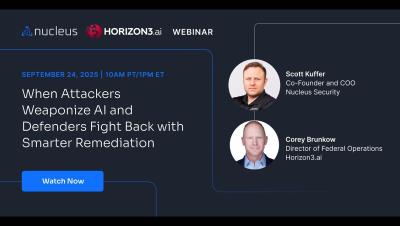
Artificial intelligence is transforming cybersecurity, and not always for the better. Attackers are now weaponizing AI to speed up reconnaissance, create exploit code, and bypass traditional defenses. Security teams can’t afford to rely on outdated vulnerability management practices. In this webinar, Scott Kuffer (COO, Nucleus Security) and Corey Brunkow (Director of Federal Operations, Horizon3.ai) break down how AI is changing the threat landscape and what defenders can do to stay ahead.
In vulnerability management, every scan tells a story. The truth is that only some of those stories matter right now and that the challenge isn’t finding vulnerabilities. It’s knowing which ones are about to cost you. If you’re dealing with hundreds of vulnerabilities per asset, especially if you’ve adopted cloud solutions, you’re not alone. That’s become the norm. But you can’t patch everything, and you shouldn’t even try.
Exposure management doesn’t end when you discover and prioritize vulnerabilities. The real measure of success is whether you’ve effectively remediated those exposures. Too often, security teams identify risks but struggle to see them resolved because remediation processes aren’t aligned across people, tools, and workflows. Exposure remediation best practices address this gap, ensuring that insights lead to action and that action drives measurable risk reduction.
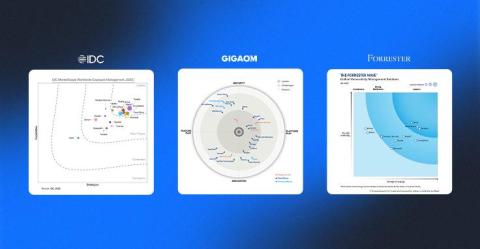
It’s one thing for us to say Nucleus is changing how enterprises address vulnerability and exposure management. It’s another when three different analyst firms all say it, and at the same time. In recent weeks, Forrester, IDC, and GigaOm each published their latest market evaluations, recognizing Nucleus in all three. That’s rare validation in a market where many vendors don’t even make the cut for inclusion.
Today we’re announcing the beginning of the next phase of our journey. We’re launching our Vulnerability Intelligence feed, Nucleus Insights. As we’ve worked with many companies, partners, and clients over the years, this became an obvious next step for Nucleus, and I want to share with you why. Fixing vulnerabilities is expensive. Not just in terms of patching costs or system downtime, but in people, time, and lost focus.
With Nucleus Security, you can calm and conquer the chaos your vulnerability and exposure management program faces. Tame the noise created by multiple scanners with the Nucleus Security Platform.