Security | Threat Detection | Cyberattacks | DevSecOps | Compliance

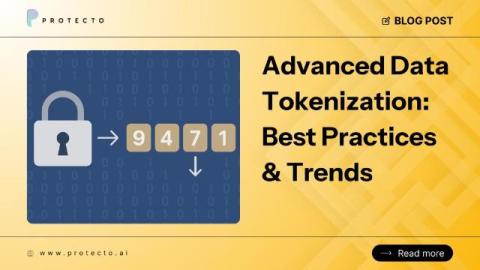
Advanced Data Tokenization: Best Practices & Trends 2025

Breaches got faster. Architectures got messier. And data stopped living in tidy tables. Modern stacks push personal and regulated data through microservices, data lakes, event streams, vector stores, and LLM prompts. Encryption still matters, but it protects containers, not behaviors. As soon as an app decrypts a record, risk comes roaring back.
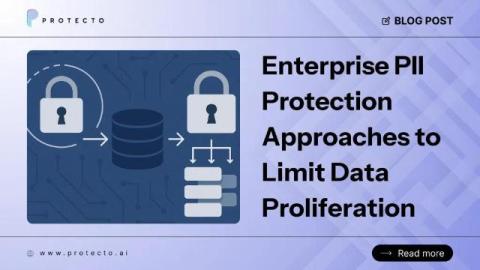
Enterprise PII Protection: Two Approaches to Limit Data Proliferation

As enterprise data moves across applications, databases, and analytics pipelines, uncontrolled proliferation of PII increases compliance risk and a potential breach. IT leaders and product managers are often struggling to find the best way to protect data. Protecto Vault helps organizations contain this risk by centralizing PII governance and offering two powerful architectural models to minimize data exposure – the Tokenization Model and the Centralized Profile Model.

Agentic experience are reshaping enterprise AI #ai #shorts

In this video breakdown, we unpack the three pillars of a successful agentic experience: Autonomy — agents that act independently Guardrails — to keep decisions safe and data protected Integration + Context — so agents work seamlessly across tools without losing meaning At Protecto, we’re building the guardrails that keep your agents autonomous, context-aware, and enterprise-ready.

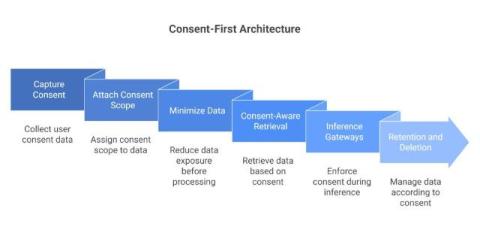
Why User Consent Is Revolutionizing LLM Privacy Practices

Ask most people what “consent” means and you’ll hear about a banner that asks to collect cookies. That was yesterday. Modern LLMs ingest emails, tickets, docs, chats, and logs. They create embeddings, reference snippets with retrieval, and sometimes fine-tune on past conversations. If you do not wire user consent into each of those steps, you either violate laws, lose user trust, or both. That is why user consent is revolutionizing LLM privacy practices.

How Enterprise CPG Companies Can Safely Adopt LLMs Without Compromising Data Privacy

A major publicly traded CPG company wanted to adopt LLM to improve performance marketing, analytics, and customer experience. However, the IT team blocked AI usage and uploads to external AI tools as interacting with public AI models could expose sensitive brand, consumer, and financial data. This isn’t an isolated problem. It’s a pattern across enterprises: business agility collides with security requirements.

Why 95% AI Fails #shorts #ai

AI On The Edge – Where Intelligence Meets Risk: Part 3 Building an enterprise AI app is NOT the same as building a traditional application, and this is why so many AI projects fail. In this conversation, we break down why 95% of enterprise AI implementations fail, what teams misunderstand about AI systems, and how to actually build AI that works in real organizations.

Comparing NER Models for PII Identification

Identifying and redacting personally identifiable information (PII) is a critical need for enterprises handling sensitive data. Over 1000 NLP models and tools claim to solve this problem, but an infinite number of options opens a paradox of choice. We compiled this comprehensive comparison that examines ten notable PII detection solutions – their features, use cases, pros/cons, and reported success rates.

Comparing Best NER Models for PII Identification

Identifying and redacting personally identifiable information (PII) is a critical need for enterprises handling sensitive data. Over 1000 NLP models and tools claim to solve this problem, but an infinite number of options opens a paradox of choice. We compiled this comprehensive comparison that examines notable PII detection solutions – their features, use cases, pros/cons, and reported success rates.

5 Critical LLM Privacy Risks Every Organization Should Know

Large language models take in unstructured data. They transform it into context, embeddings, and answers. That journey touches raw files, vector stores, model logs, and third-party services. Traditional privacy programs focus on databases and forms. LLMs push risk to the edges. The riskiest moments are when you ingest messy content, when your system retrieves chunks to support an answer, and when an agent with tool access is tricked into over-sharing.

Agentic Controls for an Agentic World: Why Traditional Security Can't Keep Up

AI agents now move data, collaborate, and make decisions at machine speed — millions of actions per second. But our entire security architecture was built for humans, not for autonomous AI. In this new Agentic World, every action is faster, every breach more invisible, and every compliance gap more dangerous. Protecto introduces Agentic Controls — intelligent, context-aware CBAC Agents that live inside AI workflows. They understand policies written in plain English, enforce zero-trust decisions before data ever leaves its boundary, and protect privacy across industries.

Why Every Tech Company is Talking About OWASP for AI (and You Should Too)

AI is changing everything—but with innovation comes new risks. In this episode of AI on the Edge, we dive deep into OWASP's Top 10 for Large Language Models with security leader Steve Wilson (Exabeam). Discover why every tech company is suddenly talking about LLM security and how you can stay ahead. Inside this episode: Why traditional security doesn’t work for AI Learn from Steve’s new book The Developer’s Playbook for LLM Security and get actionable tips to protect your AI systems.

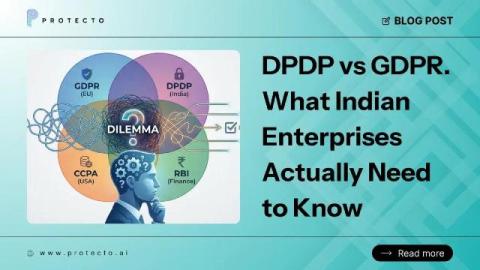
DPDP 2025: What Changed, Who's Affected, and How to Comply

India’s Digital Personal Data Protection Act, 2023 (DPDP Act) is finally moving toward activation. In January 2025 the government published the Draft Digital Personal Data Protection Rules, 2025 for public consultation to operationalize the Act. As of late 2025, the Act is enacted but core provisions still await final notification, so a phased rollout remains likely.

From Zero AI Background to GenAI Lead at Peloton #ai #shorts

Amar (Founder & CEO of Protecto) chats with Sabari Loganathan (Head of AI Strategy, Peloton) about how a chance project led to building world-class generative AI systems. From vector search to agentic AI and RAG, discover how Sabari turned technical breakthroughs into real enterprise outcomes.

Mastering LLM Privacy Audits: A Step-by-Step Framework

Language models now touch contracts, tickets, CRM notes, recordings, and code. That means personal data, trade secrets, and regulated content move through prompts, embeddings, caches, and third-party endpoints. If your audit still reads like a generic security review, you will miss the places where leaks actually happen. A modern LLM Privacy Audit Framework starts where the risk starts.

Essential LLM Privacy Compliance Steps for 2025

Large language models are no longer side projects. Sales teams rely on them for emails, support teams for ticket summaries, legal for first-draft reviews, and product teams for search and personalization. That ubiquity changes the risk math. Sensitive information flows through prompts, fine-tuning sets, retrieval indexes, analytics stores, and vendor logs. Regulators now expect the same discipline for LLM pipelines that they expect for core systems handling customer data.