Security | Threat Detection | Cyberattacks | DevSecOps | Compliance

The API Imperative: Securing Agentic AI and Beyond

We recently released The Rise of Agentic AI, our API ThreatStats report for Q1 2025, finding that evolving API threats are fueled by the rise of agentic AI systems, growing complexity in cloud-native infrastructure, and a surge in software supply chain risks, and uncovered patterns and actionable insights to help organizations prioritize risks and harden their defenses. Keep reading to find out more.

Threat Replay Testing: Turning Attackers into Pen Testers

API security is no longer just a concern; it’s a critical priority for businesses. With APIs serving as the backbone of modern applications, they’ve become a primary target for attackers. While automated security testing tools help detect vulnerabilities, their limitations leave organizations exposed to evolving threats. Here’s where Threat Replay Testing (TRT) comes into play.

Wallarm Research Releases Nuclei Template to Counter Threats Targeting LLM Apps

Wallarm Research has just released a powerful new Nuclei template targeting a new kind of exposure: the Model Context Protocol (MCP). This isn’t about legacy devtools or generic JSON-RPC pinging. It’s about the protocol fueling next-gen LLM applications — and it’s already showing up exposed in the wild.

Meeting NIST API Security Guidelines with Wallarm

On March 25, 2025, NIST released the initial public draft of NIST SP 800-228, "Guidelines for API Protection for Cloud-Native Systems." The document provides a comprehensive framework for securing APIs in cloud-enabled environments. However, for organizations looking to align with these objectives, the tooling requirements may seem initially overwhelming. Fortunately, Wallarm helps streamline the process by integrating many of these recommendations into a single, cloud-native solution.

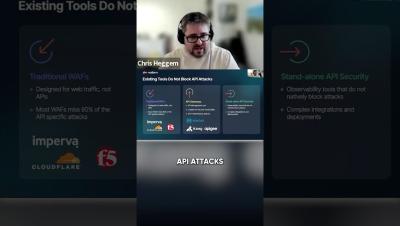
Why WAFs and API Gateways Can't Stop API Attacks #APIsecurity #Cybersecurity #APIGateway

You may have a WAF or an API Gateway in place — but your APIs are still vulnerable. Traditional tools weren’t built to detect or block API-specific threats in real time. Wallarm explains why modern API protection requires more than legacy security tools.

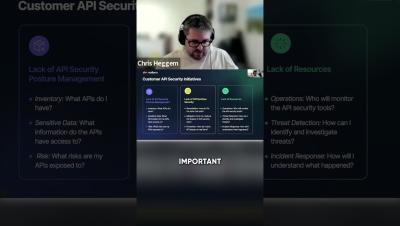
A Buyer's Journey for API Security

Join us for a webinar that explores the challenges of securing APIs, which are increasingly critical to modern organizations. We will discuss the key issues facing API driven companies today, including hidden APIs and sophisticated attacks that can disrupt operations. We'll examine real-world examples of API vulnerabilities and the solutions to address them. We'll cover the essential criteria for selecting an API security product that fits your organization's needs.

The API Security Challenge in AI: Preventing Resource Exhaustion and Unauthorized Access

Agentic AI is transforming business. Organizations are increasingly integrating AI agents into core business systems and processes, using them as intermediaries between users and these internal systems. As a result, these organizations are improving efficiency, automating routine tasks, and driving innovation. But these benefits come at a cost. AI agents rely on APIs to access data and functionality from underlying systems. Without APIs, AI agents are useless.

APIs Get Discovered in 29 Seconds - Wallarm Honeypot Shocker #APIsecurity #Cybersecurity #Honeypot

Wallarm’s honeypot research revealed a startling fact: on average, it takes only 29 seconds for exposed APIs to be discovered in the wild. That means any misconfigured or undocumented API is a ticking time bomb. If you're not protecting your API surface, attackers will find their way in — fast. Learn why real-time API protection is no longer optional and how Wallarm helps stop threats before they breach your systems.

API Attacks Up 150% - Here's Why You Should Care Now #APISecurity #APIAttacks #AIVulnerabilities

Even worse, 98.9% of AI vulnerabilities are tied to insecure APIs.. APIs are being discovered in under 30 seconds, according to Wallarm’s honeypot research. Weak authentication, broken access controls, and missing rate limits are opening the door. Now’s the time to take API security seriously. Learn how to protect your systems before it’s too late.