
Your Visual Identity Matters - Can AI Get It Right?
First impressions in professional settings have always mattered, but the digital layer has changed the stakes entirely. Your profile picture is now the first handshake, the initial eye contact, the silent introduction that happens before a single word is exchanged. And yet, for most professionals, this critical piece of visual identity remains an afterthought—a cropped wedding photo, a five-year-old conference badge image, or a smartphone selfie taken in less-than-ideal lighting. The gap between the professional you are and the professional you appear to be online is wider than most people realize, and it is a gap that traditional photography has failed to close affordably or conveniently. Over the past few weeks, I put that assumption to the test by running a full workflow through AI professional headshot, a service that turns casual smartphone selfies into studio-grade portraits in under half an hour. What I found was a tool that addresses not just the aesthetic problem of bad headshots, but the deeper issue of visual trust in professional communication.
The Psychology of the Profile Picture: What Your Photo Actually Communicates
Before evaluating any headshot service, it is worth understanding why this matters at all. Research consistently shows that profile pictures influence hiring decisions, networking responses, and even the perceived credibility of your expertise. A blurry or poorly lit photo signals a lack of attention to detail. An overly casual image can undermine your authority in formal contexts. A photo that looks dated raises questions about whether your skills and knowledge are equally out of touch.
The Unspoken Expectations of Different Platforms
LinkedIn, corporate websites, conference speaker pages, and press releases all carry different visual expectations. A single headshot rarely serves all of these contexts well. What works for a tech startup founder’s LinkedIn profile may look out of place on a law firm’s partner page. What reads as approachable on a consulting bio may feel too casual for a medical practice website. The traditional solution has been to book multiple studio sessions or to settle for a single photo that tries to split the difference—and often fails at both.
Why Selfies Undermine Professional Credibility
The selfie angle, the arm-length perspective, and the phone-quality lighting all carry implicit signals. They suggest that you did not prioritize your professional image enough to invest in proper photography. They hint at a certain level of informality that may not align with the expectations of your industry. This is not about vanity; it is about the subconscious calculus that every viewer performs when they encounter your face in a professional context.
The Service Architecture: How Personalization Replaces the Photographer
The platform’s approach to solving this problem is rooted in a simple but technically sophisticated premise: if you can train an AI to understand your facial structure from multiple reference images, you can generate an unlimited number of professionally styled portraits without ever stepping into a studio.
Step One: Building Your Facial Model
The Input Requirements
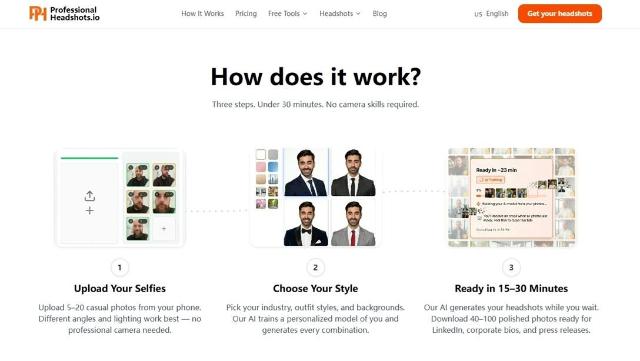
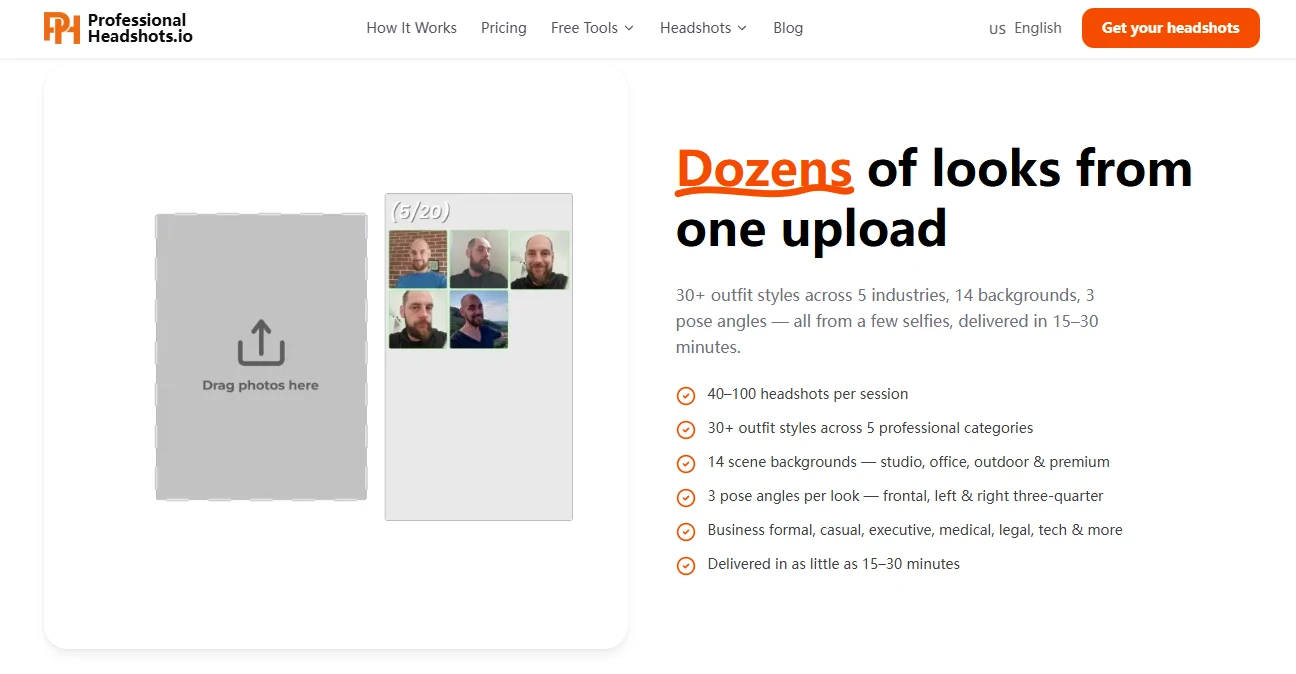
The service asks for five to twenty casual selfies from your phone’s camera roll. Different angles and lighting conditions are recommended, but professional camera equipment is explicitly not required. This is a deliberate design choice that lowers the barrier to entry while providing the AI with sufficient data to build an accurate facial model.
The Privacy Foundation
Your selfies are used exclusively to generate your headshots—they are not used to train AI models, sold to third parties, or shared in any capacity. All data is encrypted during upload and storage, and automatically deleted after thirty days. The service is GDPR and CCPA compliant, and full commercial usage rights are included with every package.
Step Two: Contextual Style Selection
Matching Visual Identity to Professional Context
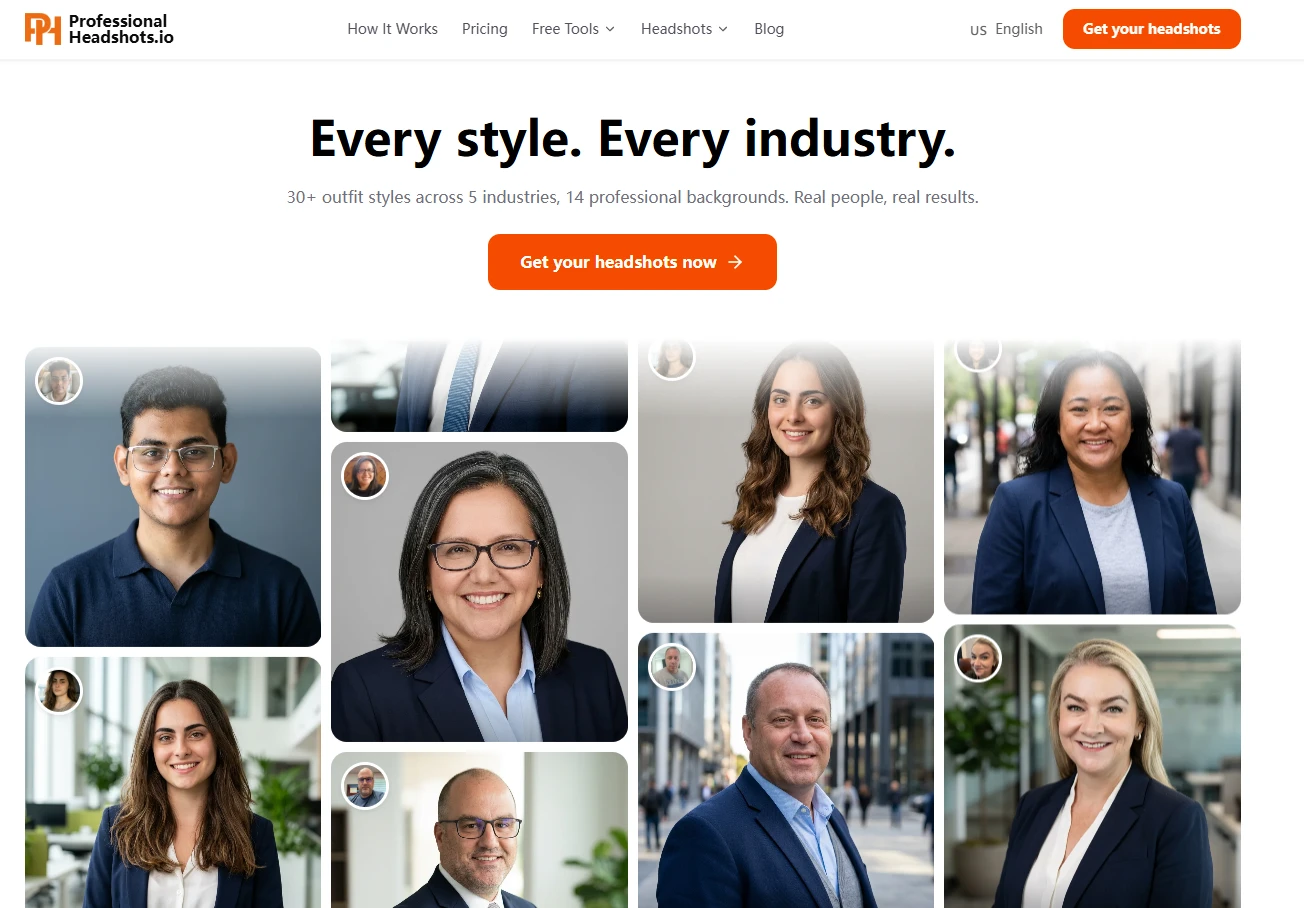
Once your facial model is built, you select your professional context. The platform offers over thirty outfit styles across five industry categories, paired with fourteen scene backgrounds that range from studio and office settings to outdoor and premium environments. The range is not arbitrary—it is designed to match the visual expectations of specific fields including business formal, casual, executive, medical, legal, and tech.
The Combination Engine
The AI generates every combination of your selected styles, producing a cohesive set of images that feel like they came from a single studio session. Each look comes with three pose angles—frontal, left, and right three-quarter views—providing variety without requiring you to make additional decisions.
Step Three: Delivery and Output
The Waiting Period
The generation process delivers results in fifteen to thirty minutes, depending on your chosen package. Basic plans are quoted at twenty to thirty minutes, Pro at fifteen to twenty minutes, and Executive at ten to fifteen minutes.
What You Receive
The output is a downloadable set of between forty and one hundred high-resolution headshots. The Basic plan delivers forty images across four unique looks, the Pro plan offers seventy images across eight looks, and the Executive plan provides one hundred images with unlimited looks and access to all scenes and styles.
The Visual Consistency Test: Does It Actually Look Like You?
The core question for any AI-generated portrait service is whether the output retains your recognizable features while elevating the overall quality. In practical testing, the service performs well on this front.
Facial Recognition and Expression Authenticity
The AI appears to have learned facial structures thoroughly enough to reproduce them consistently across different outfits, backgrounds, and angles. Expressions remain natural rather than frozen, and the lighting adapts to each background context rather than applying a uniform filter. The result is a set of images that look like you—just a more polished version of you.
Where the System Occasionally Stumbles
Complex outfit textures or patterns can sometimes appear slightly simplified in the generated images. The transition between subject and background is not always perfectly seamless in every single frame. However, the overall hit rate is high enough that you are virtually guaranteed to find multiple usable shots from a single session.
The Practical Resolution Question
From a professional use standpoint, the generated images hold up well at the resolutions and sizes where they are most likely to be viewed—LinkedIn profile pictures, email signatures, conference bios, and company directory entries. The Executive tier offers 4K downloads for users who need higher-resolution files.
Package Structure: One Payment, No Ongoing Commitment
The pricing model is straightforward and avoids the subscription fatigue that plagues so many modern tools. The service offers three one-time payment tiers.
|
Package |
Price |
Headshots |
Looks |
Delivery |
Regeneration Credits |
|
Basic |
$29 |
40 |
4 |
20–30 min |
5 |
|
Pro |
$49 |
70 |
8 |
15–20 min (priority) |
10 |
|
Executive |
$79 |
100 |
Unlimited |
10–15 min (VIP) |
20 + 1 free redo |
All packages include full commercial usage rights, meaning you can use the generated images for professional purposes without licensing restrictions. The Pro and Executive tiers also include priority or VIP support queues.
The Traditional Studio Comparison: A Question of Trade-Offs
The contrast between this service and conventional photography is stark enough that it reshapes the value proposition entirely.
|
Aspect |
Traditional Studio |
ProfessionalHeadshot.io |
|
Price |
$200–$500 per session |
From $29 |
|
Turnaround |
2–5 days |
15–30 minutes |
|
Number of Photos |
5–10 |
40–100 |
|
Style Variety |
1–2 outfits |
30+ styles, 14 backgrounds |
|
Availability |
Appointment required |
24/7, instant access |
|
Location |
Travel to studio |
From home or office |
|
Revisions |
Paid re-shoot |
Regeneration credits included |
Traditional studio photography still offers value for users who require highly specific creative direction, physical wardrobe fitting, or the experience of being guided through poses by a human photographer. But for the vast majority of professionals who simply need a credible, polished headshot for digital platforms, the AI alternative is difficult to dismiss on cost, convenience, or output volume.
Where the Service Fits Into a Professional Workflow
Updating your LinkedIn headshot becomes a task measured in minutes rather than days. The volume of output means you can refresh your visual presence across multiple platforms without running the same photo everywhere. The platform’s approach—generating dozens of variations from a single upload—effectively gives you a year’s worth of professional imagery in one session.
The Regeneration Safety Net
The inclusion of regeneration credits across all packages provides a practical safety net. If certain generated images do not meet your expectations, you can request new versions without paying for a full re-shoot. The Executive tier even includes one free complete redo within thirty days.
Realistic Limitations: What the Service Cannot Do
No AI tool is without constraints, and this service is no exception. The quality of your output depends significantly on the quality and variety of your input selfies. Poorly lit, blurry, or overly similar images will yield weaker results. Complex scenes with intricate props or highly specific compositional requirements may require multiple generation attempts. The system does not guarantee identical consistency across every single image in a batch. The service also does not currently offer granular editing controls or manual retouching tools; you are working with the generated outputs as they arrive.
Who This Service Actually Serves
This tool is best suited for professionals who need a credible, polished headshot quickly and without the logistical overhead of a studio appointment. It is particularly valuable for job seekers updating their LinkedIn presence, founders preparing investor-facing materials, and professionals in fields like law, medicine, and technology where a polished visual identity matters but the budget for professional photography may be limited. It is less suited for users who require highly specific creative direction, physical prop integration, or the reassurance of a human photographer guiding the session in real time.
The Practical Verdict
After running a full workflow through the service, the takeaway is less about whether AI can replace traditional photography and more about whether it needs to. For the working professional who simply needs a credible, polished headshot without the scheduling, travel, and expense of a studio session, this service delivers a genuinely practical alternative. The results may not always be flawless on every single frame, but the volume and variety of output mean you are virtually guaranteed to find multiple images that work for your needs. The privacy protections are clearly stated and verifiable, and the one-time pricing structure avoids the subscription fatigue that plagues so many modern tools. It is not a universal replacement for professional photography, but for the specific use case of generating professional digital portraits quickly and affordably, it is a solution that earns its place in the modern professional’s toolkit.