
Staying Safe and Connected: The Security Side of Off-Grid Technology
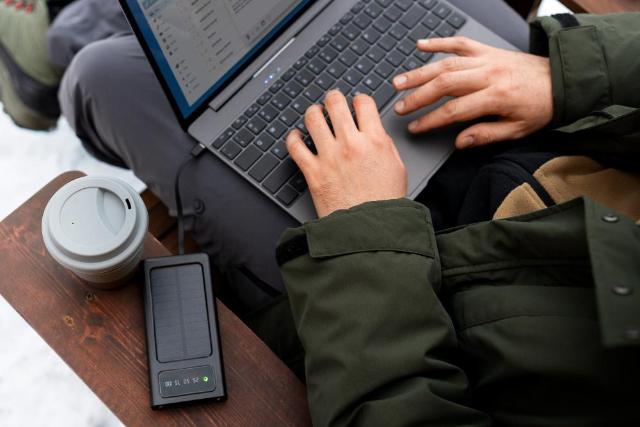
Designed by Freepik
Going off the grid used to mean completely disconnecting. No phone signal, no internet, no way to call for help if something went wrong. For remote workers, overlanders, and anyone venturing into isolated areas, that kind of disconnection wasn't just inconvenient. It was a genuine safety risk.
Today, a growing ecosystem of portable power systems, satellite communicators, and IoT-enabled devices is changing that picture. But as these technologies become more capable and more connected, they also introduce new considerations around data security, device reliability, and personal safety that are worth understanding before you head out.
Remote Work Has Pushed People Further From the Grid
The post-pandemic world didn't just normalize working from home. It normalized working from anywhere. Digital nomads, mobile professionals, and field-based teams now operate from locations that would have been unthinkable for productivity just a few years ago.
Caravans parked in national forests, campsites in the Australian outback, cabins without mains power. These are all real offices now. And every one of them depends on portable technology to stay functional.
The challenge is that the further you get from traditional infrastructure, the more you rely on your own gear. That means portable solar panels, lithium batteries, inverter generators, and power stations become the backbone of your connectivity. If your power fails, everything else goes with it: your laptop, your phone, your satellite communicator, and your ability to stay in touch with the outside world.
Power Reliability Is a Safety Issue, Not Just a Convenience
Most people think of off-grid power as a camping luxury. Something that keeps the fridge cold and charges a phone. But when you're genuinely remote, reliable power is directly tied to your safety.
A charged satellite messenger can call for emergency help. A working GPS device can guide rescuers to your exact location. A powered two-way radio can be the difference between a stressful situation and a dangerous one. All of these devices need electricity to function, and when you're days from the nearest town, you can't exactly pop down to a charging station.
This is why experienced off-grid travellers treat their power setup with the same seriousness as their first aid kit. Australian retailer Outback SafeTrack has built its entire business around this idea, offering curated off-grid power solutions from solar panels and lithium batteries to inverter generators and portable power stations, specifically designed for the harsh and remote conditions of the Australian landscape. For anyone heading into isolated areas, having a dependable power source is not optional.
Connected Devices in Remote Areas Bring New Security Risks
Here is where things get interesting from a cybersecurity perspective. The devices people bring into remote environments are increasingly connected. Bluetooth-enabled lithium batteries that report charge levels to an app. Solar charge controllers with Wi-Fi monitoring. GPS trackers that transmit location data over cellular or satellite networks.
Each of these devices is, technically, an IoT endpoint. And like any IoT device, they carry potential vulnerabilities that users rarely think about when they are focused on setting up camp or getting a signal.
Default passwords are a common issue. Many Bluetooth-enabled camping batteries and smart charge controllers ship with factory-set PINs that users never bother to change. In a crowded campground or caravan park, that is an open invitation for anyone within range to connect to your gear.
Firmware updates are another blind spot. Manufacturers regularly patch security flaws in connected devices, but when you are off the grid with limited bandwidth, updating firmware is rarely top of mind. Those unpatched devices can become entry points for anyone looking to exploit known vulnerabilities.
For a practical guide on locking down these kinds of connected devices, SecuritySenses' article on 8 methods to protect IoT devices from cyber threats covers the fundamentals, from changing default credentials to network segmentation and encryption best practices.
GPS Trackers and Location Data Deserve Extra Attention
One of the most security-sensitive devices in any off-grid setup is the GPS tracker. Whether it is a personal locator beacon, a vehicle tracker, or a satellite messenger, these devices transmit your precise location to external servers. That data is incredibly valuable if it falls into the wrong hands.
Think about it this way. A vehicle GPS tracker broadcasting your position in real time tells anyone with access exactly where your car, caravan, or boat is at all times. If that data stream is not encrypted or if the tracking platform uses weak authentication, it becomes a roadmap for theft.
Personal locator beacons carry a different kind of risk. These devices are designed to summon emergency services, and false activations or spoofed signals can waste critical rescue resources. While the technology itself is quite secure, the platforms and apps that interface with these devices are not always built to the same standard.
The takeaway is simple. Before you bring any location-transmitting device into the field, check how it handles your data. Look for end-to-end encryption, strong authentication on companion apps, and clear privacy policies from the manufacturer.
Practical Steps for Securing Your Off-Grid Tech Setup
You do not need to be a cybersecurity expert to take meaningful steps toward protecting your devices in the field. A few straightforward habits go a long way.
Before you leave home, change every default password on every connected device you are bringing. This includes Bluetooth batteries, solar monitors, Wi-Fi-enabled power stations, and any GPS or tracking equipment. Use strong, unique passwords for each one.
Update the firmware on all your devices while you still have a reliable internet connection. Manufacturers push security patches regularly, and running outdated firmware is one of the easiest vulnerabilities to exploit.
If you are using a portable Wi-Fi hotspot or a phone as a tethered access point, make sure your network is encrypted with WPA3 and that the password is not something guessable. Open or weakly secured hotspots in public campgrounds are low-hanging fruit for opportunistic attackers.
Finally, consider what data your devices are transmitting and to whom. Review the permissions on companion apps, disable location sharing features you do not need, and be selective about which platforms have access to your real-time position.
Off-Grid Safety Is a Security Conversation Now
The line between personal safety and cybersecurity is getting thinner every year. The same devices that keep you safe in remote locations, such as GPS trackers, satellite communicators, and smart power systems, are also potential targets if they are not properly secured.
This does not mean you should avoid the technology. Far from it. These tools have genuinely saved lives and made remote travel and work safer than it has ever been. But treating them with the same security mindset you would apply to your home network or office devices is becoming essential.
Whether you are a weekend camper or a full-time remote worker operating from the back of a 4WD, the fundamentals are the same. Secure your devices, protect your data, and make sure the gear keeping you connected is something you can actually count on when it matters most.