Security | Threat Detection | Cyberattacks | DevSecOps | Compliance

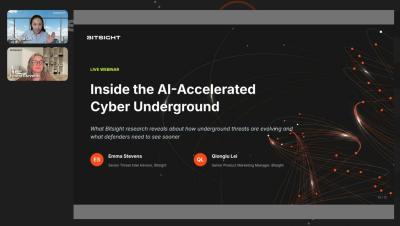
Inside the AI-Accelerated Cyber Underground

Cyberattacks take shape long before a breach through exposed systems, vulnerable software, stolen credentials, underground tools, and attacker experimentation. In this webinar, Emma Stevens, Threat Intelligence Researcher at Bitsight, and Qionglu Lei, Senior Product Marketing Manager at Bitsight, explore what Bitsight research reveals about AI-enabled attacker behavior and the changing cyber underground.

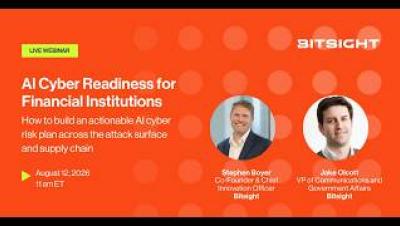
AI Cyber Readiness for Financial Institutions

Advanced AI models are changing the cyber threat landscape by accelerating vulnerability discovery, exploit development, and attacker decision-making. Regulators like the ECB have made clear: action plans are necessary. Financial institutions need to understand whether their existing cyber risk programs can keep pace, not only across their own attack surface, but across the critical third parties and software dependencies they rely on.

Threat Intelligence for prioritization

More data does not always mean better decisions. For TPRM teams, the value comes from actionable, correlated intelligence that helps identify which risks need attention first. In this clip from Three Hard Truths About TPRM, Julie Gaiaschi of TPRA and Vanessa Jankowski of Bitsight discuss how threat context can help organizations prioritize third-party risk, strengthen supply chain resilience, and support business continuity under pressure.

Real Time Risk Needs Real Time Visibility

Third-party risk doesn’t wait for annual reviews. Vendor ecosystems change constantly, and risk teams need visibility that keeps pace. In this clip from Three Hard Truths About TPRM, Julie Gaiaschi, CEO and Co-Founder of TPRA, and Vanessa Jankowski, SVP and GM of Bitsight’s TPRM solution, explore why continuous monitoring and real-time visibility are critical for stronger accountability, faster response, and better resilience across the vendor ecosystem.

Business Context Is the New Risk Filter

Not every vendor risk deserves the same level of attention. The real challenge is knowing which risks matter most to the business. In this clip from Three Hard Truths About TPRM, Julie Gaiaschi of TPRA and Vanessa Jankowski of Bitsight discuss why business context is becoming the new filter for prioritizing third-party risk — helping teams focus on continuity, revenue protection, and the vendors that truly impact operations.

Stop managing vendor lists Start mapping dependencies. #cybersecurity #mythos

Third-party risk management can’t stop at static vendor lists. In today’s interconnected business environment, organizations need to understand the dependencies behind their vendors — including subcontractors, fourth parties, and concentration risks that can affect operational resilience. In this clip from Three Hard Truths About TPRM, Julie Gaiaschi, CEO and Co-Founder of TPRA, and Vanessa Jankowski, SVP and GM of Bitsight’s TPRM solution, discuss why stronger Nth-party visibility is essential for modern third-party risk programs.

Beyond Prevention: Frontier AI and the Shift to Cyber Resilience

Frontier AI is compressing the time between vulnerability discovery and exploitation, making reactive security strategies harder to sustain. In this webinar, Roland Cloutier (Former CISO of of ByteDance & TikTok, ADP, and EMC) and Gabi Reish discuss how security leaders can move beyond patching everything to prioritize real risk, measure cyber readiness, and communicate security posture to the board.

Fireside Chat With TPRA: Three Hard TruthsAbout TPRM in the Post-Mythos Era

Frontier AI models like Mythos have intensified the urgency to rethink cybersecurity. But for third-party risk teams, the harder question remains: how do we prioritize the actions that actually drive business outcomes? As TPRM becomes more tightly tied to business impact, resilience, continuity, and revenue protection, leaders need a clearer view of the hard truths shaping their programs.