Security | Threat Detection | Cyberattacks | DevSecOps | Compliance

How to Detect Phishing Before It Happens: Moving Beyond User Awareness

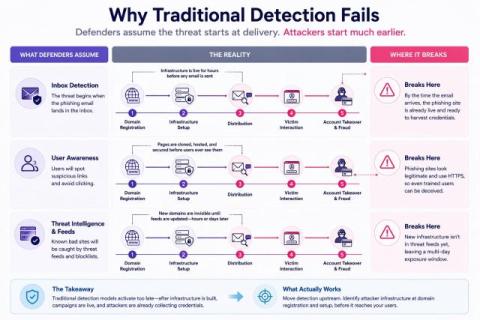
By the time a phishing email lands in an inbox, the attacker’s infrastructure has already been live for hours. That’s not a hypothetical. Zimperium’s 2024 research found that 60% of newly created phishing domains receive a TLS certificate within the first two hours of registration. The site is credentialed, hosted, and ready before most security teams have any signal it exists.

How to Detect Man-in-the-Middle Attacks: Indicators, Methods, and Detection Gaps

Most MITM attacks don’t announce themselves. No alerts fire, no certificates visibly break, and no users report anything unusual. By the time the interception is discovered, credentials or session tokens are already in attacker hands. Knowing how to detect man-in-the-middle attacks requires looking across multiple layers: network traffic, DNS resolution, TLS certificate integrity, and session behavior.

Memcyco Certifications: ISO 27001, 27017, 27018 and SOC 2 Type II

As of 2026, Memcyco maintains active certifications across ISO/IEC 27001, ISO/IEC 27017, ISO/IEC 27018, and SOC 2 Type II (AICPA). These certifications confirm that Memcyco maintains independently audited processes for managing information security, securing cloud environments, and protecting sensitive data.

5 Remote Desktop Takeover Scams Exposed: Enterprise ATO Lessons for 2026

Remote desktop takeover scams are not difficult because attackers bypass controls. They are difficult because, by the time controls engage, the session already appears legitimate. Security teams are used to thinking about compromise in terms of malware, credentials, or infrastructure exposure. Remote access scams break that model. The attacker does not need to break in. They are invited in, then operate within a session that uses the same access and permissions as the legitimate user.