Security | Threat Detection | Cyberattacks | DevSecOps | Compliance

Unsolved Challenge: Why API Access Control Vulnerabilities Remain a Major Security Risk

Despite advancements in API security, access control vulnerabilities, such as broken object-level authentication (BOLA) and broken function-level authentication (BFLA), remain almost impossible to detect. This blog will explore why these vulnerabilities are so difficult to detect, the limitations of current security tools, and the implications for businesses relying on API-driven applications. It will also discuss potential approaches for improving API security posture.

AI Agents and API Security: The Hidden Risks Lurking in Your Business Logic

Modern organizations are becoming increasingly reliant on agentic AI, and for good reason: AI agents can dramatically improve efficiency and automate mission-critical functions like customer support, sales, operations, and even security. However, this deep integration into business processes introduces risks that, without proper API security, can compromise sensitive data and decision-making.

Collaborate & Protect: The Future of API Security Strategy #CyberThreats #CISAReport #APISecurity

The API attack surface is rapidly expanding, with 50% of known exploited vulnerabilities now API-related (CISA). Security leaders must prioritize API security, implement real-time monitoring, and foster cross-team collaboration to stay ahead of threats. Strengthen your defenses now!

Data Leaks and AI Agents: Why Your APIs Could Be Exposing Sensitive Information

Most organizations are using AI in some way today, whether they know it or not. Some are merely beginning to experiment with it, using tools like chatbots. Others, however, have integrated agentic AI directly into their business procedures and APIs. While both types of organizations are undoubtedly realizing remarkable productivity and efficiency benefits, they may not know they are putting themselves at a significant security risk.

API Honeypot Results: How Fast Do Hackers Strike? #CyberThreats #InstantDefense #HackerSpeed

New APIs are attacked in just 29 seconds, according to Wallarm’s API honeypot test. Batch requests can extract 10M records in under 10 seconds, making real-time protection essential. Learn how to secure APIs before attackers strike.

One PUT Request to Own Tomcat: CVE-2025-24813 RCE is in the Wild

A devastating new remote code execution (RCE) vulnerability, CVE-2025-24813, is now actively exploited in the wild. Attackers need just one PUT API request to take over vulnerable Apache Tomcat servers. The exploit, originally published by a Chinese forum user iSee857, is already available online: CVE-2025-24813 PoC by iSee857.

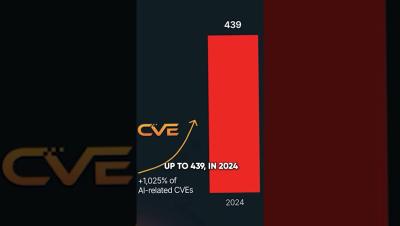
AI Security = API Security: 10x Surge in AI-Related CVEs #AIExploits #APIAttacks #SecureAI

AI-driven applications rely on APIs, making them a prime target for attackers. In 2024, AI-related CVEs increased 10x, with 98.6% of vulnerabilities linked to APIs. As AI agents interact with systems via APIs, security risks grow. Learn why securing AI means securing APIs.

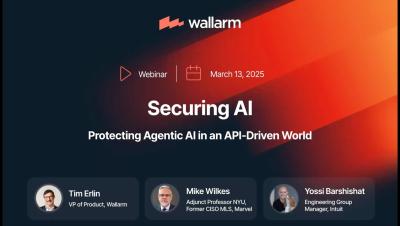
Secure Your AI: Protecting Agentic AI in an API-Driven World

As enterprises embrace agentic AI for transformative business opportunities, they face a critical challenge: ensuring these intelligent systems operate securely. Wallarm, the leader in API-first security, invites you to an exclusive webinar to explore how to safeguard AI agents, APIs, and sensitive data from emerging threats. Learn how to protect your AI ecosystem and ensure business continuity with actionable insights from Wallarm Security Lab. Discover why 90% of agentic AI deployments are vulnerable and how to defend them.

API Security Failures: What Went Wrong at Dell & Twilio? #APIBreach #DataLeak #DellHack

Major companies like Dell and Twilio suffered API breaches due to poor validation, broken access control, and missing rate limits. Dell’s 49M records were exposed at 5000 requests per minute, while Twilio’s API leak allowed attackers to validate accounts. Learn how insecure API views lead to massive data breaches—and how to protect your APIs.

Wallarm's Top API Threats: What You Need to Know #InjectionAttacks #AttackVectors #APIHacks

API threats are evolving fast—but are security standards keeping up? While OWASP updates API security guidelines yearly, real-world threats like injections remain a top attack vector. Learn why Wallarm’s research reveals a different API security reality and what organizations must do to stay protected.

API Specifications: Why, When, and How to Enforce Them

APIs facilitate communication between different software applications and power a wide range of everyday digital experiences, from weather apps to streaming services and everything in between. They are also a critical ingredient of AI. However, if not structured and standardized properly, APIs can become inconsistent, insecure, and difficult to maintain. This is where API specifications come into play.

API Risks & Threats: What Wallarm's Reports Reveal #APIThreats #CyberResearch #APIExploitation

Wallarm conducts quarterly and annual API threat reports to provide data-driven insights on API vulnerabilities, risks, and attacks. This research helps the industry understand emerging threats and improve API security strategies. Stay informed with the latest findings!