Security | Threat Detection | Cyberattacks | DevSecOps | Compliance

The Security Illusion: Why Your AI Security Tool Won't Save You (And Neither Will Your Traditional API Security)

The enterprise security world is having two separate conversations that desperately need to collide. On one side, application security (AppSec) teams are scrambling to secure APIs – the connective tissue of every modern application. On the other, a new wave of “AI security” vendors promise to protect your LLMs from prompt injection, data leakage, and hallucinations. Both groups are solving real problems. Both are missing half the picture.
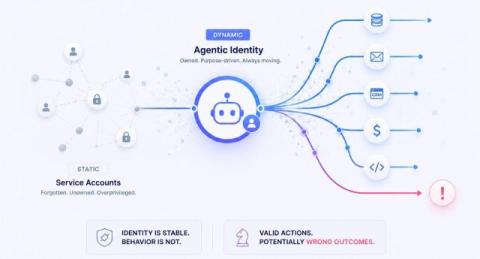
Agentic Identity Is Not NHI With a Brain

The non-human identity (NHI) problem was always the same problem: too many service accounts, too few owners, too many secrets in too many places. They sat where we left them, quietly piling up privilege, outliving the engineer who created them. Eventually someone, an auditor, sometimes an attacker, went looking and found them. Agents are a different problem.

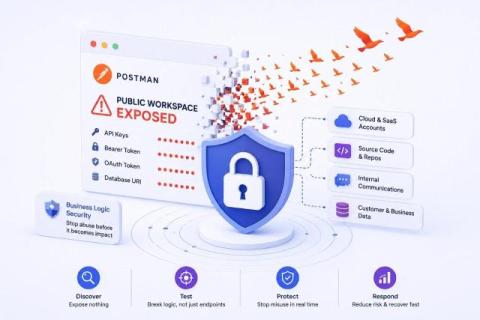
Postman Workspace Exposure: When Your API Test Suite Becomes a Security Risk

Let’s start with a scenario. This is illustrative, not a single reported incident. A developer shares a Postman collection in Slack to move faster. “Here’s the Postman collection for the payment API. It has live auth headers so you can test prod endpoints.” The team uses it, work gets done, and the link stays. What no one realizes is that the collection lives inside a public Postman workspace. Weeks later, it is indexed by search engines. The URL requires no login.

Next.js Vulnerability Exposes Credentials and Protected Data - Why Runtime API Security Matters

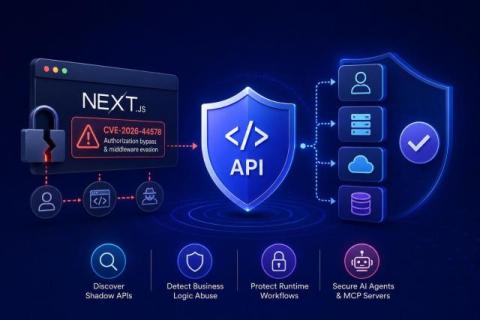
A newly disclosed security issue, tracked as CVE-2026-44578, affecting Next.js applications is raising concerns across the developer and security communities after researchers identified multiple authorization bypass and middleware evasion paths that could expose protected application data and credentials. The vulnerabilities impact several versions of Next.js and allow attackers to bypass middleware-based authorization controls using crafted requests and route manipulation techniques.