Security | Threat Detection | Cyberattacks | DevSecOps | Compliance

The 9 Essential Requirements for an Enterprise Vulnerability Management System

The fastest way to reduce risk at enterprise scale is to standardize on a vulnerability and exposure management platform that unifies asset visibility, prioritizes what matters, and automates workflow to remediate. In this article, we’ll break down the nine essential requirements security leaders should insist on when evaluating an enterprise vulnerability management system, whether it’s an existing tool in their tech stack or a potential new capability.
Why More AI Doesn't Guarantee Better Vulnerability Management Outcomes

AI is everywhere in vulnerability management right now. Technology vendors in all areas are adding new features and making bold claims about revolutionary capabilities. But here's the reality, especially for vulnerability and exposure management: more AI doesn't automatically mean less risk. The gap between AI's promise and its practical impact in enterprise vulnerability management is wider than most organizations realize.

Exposure Assessment Platforms Are Here and They're a Big Part of Successful CTEM

Gartner released its 2025 Magic Quadrant for Exposure Assessment Platforms in November 2025. The new categorization detailed in the report is something we view as a natural progression in response to the way enterprise risk has evolved over the years. It’s a move away from viewing vulnerabilities in a vacuum and looking at a more complete picture of the risk today’s enterprises face.

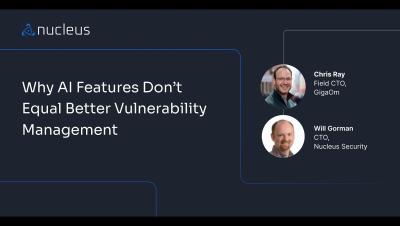
Why AI Features Don't Equal Better Vulnerability Management

AI is becoming table stakes in vulnerability and exposure management. In this candid webinar conversation, Chris Ray, Field CTO at GigaOm, and Will Gorman, CTO and leader of AI initiatives at Nucleus Security, challenge the assumption that more AI automatically leads to better outcomes.