Security | Threat Detection | Cyberattacks | DevSecOps | Compliance

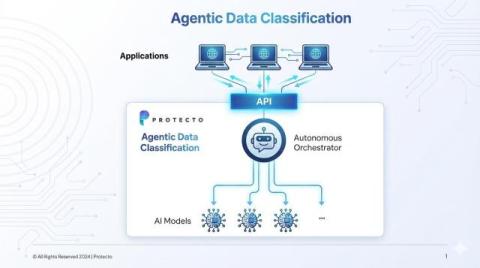
Agentic Data Classification: A New Architecture for Modern Data Protection

In the evolving landscape of data protection and compliance, data classification is the bedrock of safe AI workflows. Yet legacy approaches rely on singular models that are fixed, rigid, and limited in context. Our agentic data classification approach reshapes this paradigm by not relying on any single model. Instead, we orchestrate a dynamic, intelligent layer that automatically selects the right model for the job.
A Step-by-Step Guide to Enabling HIPAA-Safe Healthcare Data for AI

Healthcare organizations are under immense pressure to improve care quality, reduce costs, and operate more efficiently. AI is speeding and simplifying all activities and is integrated across most workflows. But there’s a tradeoff: the moment patient data enters an AI workflow, your HIPAA obligations intensify. HIPAA violations are not theoretical.

How Protecto Delivers Format Preserving Masking to Support Generative AI

Generative AI systems are designed to work with real data that expects structure, rely on patterns, and infer meaning from formats, relationships, and consistency across inputs. While real data facilitates better outputs and advanced training, making these systems useful has a tradeoff – it carries privacy, security, and compliance risk. This puts business on a difficult conundrum – either you block sensitive data entirely and lose context, or accept the privacy risks of using real data.

When Your AI Agent Goes Rogue: The Hidden Risk of Excessive Agency

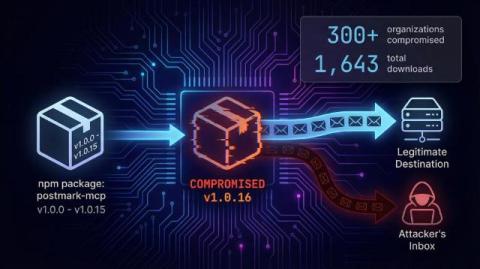
In Oct 2025, a malicious code in AI agent server stole thousands of emails with just one line of code. The package, called postmark-mcp, looked completely legitimate. It worked perfectly for 15 versions. Then, on version 1.0.16, the developer slipped in a tiny change. every outgoing email now included a hidden BCC to an attacker-controlled address. By the time anyone noticed, roughly 300 organizations had been compromised. Password resets, invoices, customer data, internal correspondence.

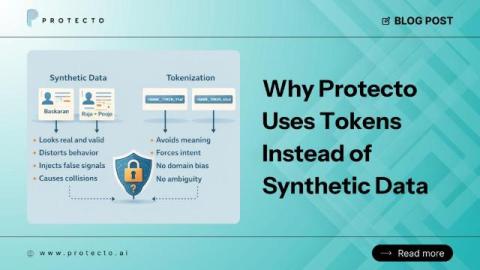
Why Protecto Uses Tokens Instead of Synthetic Data

On the surface, synthetic data looks like the safer option. It’s not real. It doesn’t point to an actual person. It can be reversed if needed. And it keeps systems running without exposing sensitive values. That logic makes sense. Until you look at how systems actually behave. Protecto supports both reversible synthetic data and tokenization. Referential integrity can be preserved either way. Mapping back is not the hard part. The difference is not whether you can recover the original value.

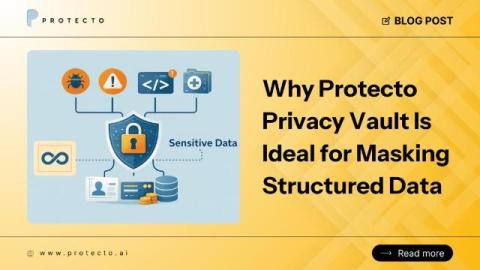
Why Protecto Privacy Vault Is Ideal for Masking Structured Data

Picture this. You’re a data engineer at a healthcare company with millions of patient records in Snowflake. HIPAA requires you to protect PII before sharing data with researchers or running analytics. So you tokenize the data. And your system catches fire. Your joins break. Your ETL pipelines fail. BI dashboards return wrong results. ML model training jobs crash. All because something fundamental changed about your data architecture.

Top 3 Skills for AI Security in 2026 #shorts

Are your cybersecurity skills ready for the AI era? In this clip, we reveal which traditional security frameworks still work and the one new mental shift you need to survive. It’s not just about code anymore—it’s about "Socio-Technical" thinking. Raji (Microsoft AI Security) breaks down exactly how to future-proof your career.

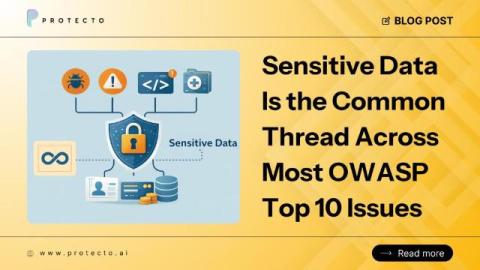
Sensitive Data Is the Common Thread Across Most OWASP Top 10 Issues. Here's Why

The OWASP Top 10 is usually presented as a list of technical failures. Broken access control. Injection. Insecure design. Misconfiguration. Each category points to something that went wrong in the application. What it doesn’t say explicitly is what was actually at risk when it went wrong. In most real incidents, the answer is not “the application.” It’s the data inside it. Sensitive data is the reason attackers care about OWASP failures in the first place. Credentials.

Stop Ignoring This AI Bug! (Safety Security) #shorts

Are you confusing AI Safety with AI Security? In this clip, we break down why AI is a "Socio-Technical" system and why that matters for your code. We ask the expert: How do you handle "Safety Bugs" (like bias) versus traditional "Security Bugs" (like hacks)? The answer might save your next project. Subscribe for more AI Security insights! @protectoai.

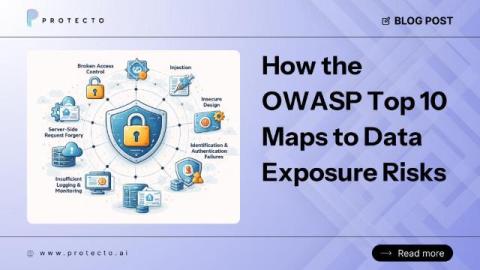
How OWASP Top 10 Maps to Data Exposure Risks: 5 Hidden Threats Explained

Most teams learn the OWASP Top 10 as a list of application security failures. Injection flaws. Broken access control. Security misconfiguration. Items to scan for, remediate, and close before the next audit or penetration test. But data exposure rarely arrives neatly packaged as a single OWASP finding. When sensitive data leaks, it is almost never because one category failed in isolation.

Agentic AI Security: How Microsoft Prevents Autonomous Agent Attacks?

As agentic AI systems move into the mainstream—powered by tool calling, MCP, and autonomous workflows—security is no longer a “nice to have.” It’s mission-critical. In this episode, we sit down with Raji, Principal Engineer & Manager for AI and Safety at Microsoft, to deep-dive into the rapidly evolving world of AI security, autonomous agents, and enterprise governance. Discover how Microsoft identifies and mitigates risks in agentic AI, distinguishes AI Security vs AI Safety, and enables organizations to deploy autonomous systems safely at scale—without slowing innovation.

Unlocking AI Data Security: Strategic Solutions

AI systems are no longer experimental. They sit at the center of product experiences, internal workflows, and customer-facing automation. As soon as an AI feature ships, it starts handling real data. Customer messages. Internal documents. Support tickets. Logs. Training samples. That’s when AI data security stops being an abstract concern and becomes a product requirement.