Remediation Coordination Breaks Down When Assets Have No Owner

Remediation coordination often fails because security teams are dealing with unowned assets and resources. In this hands-on demo, Seemplicity Exposure Management Strategist Rob Babb shows how ownership gaps create blind spots, stall remediation, and slow exposure reduction across teams. The walkthrough highlights how remediation orchestration establishes accountability, improves visibility, and enables automation for exposure remediation across cloud, application, and infrastructure environments.

Ensuring API Testing Meets Compliance: Policies, Performance, and Proof

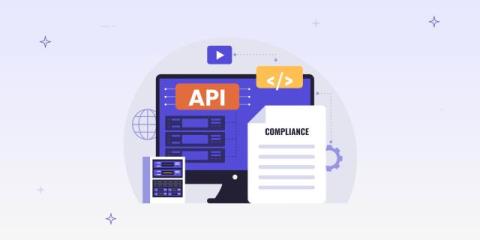
APIs sit at the center of modern applications. They move data between systems, power mobile apps, and enable integrations at scale. Naturally, they are also a focal point for regulators, auditors, and attackers. Most organizations today do test their APIs. Yet many still struggle during audits. Not because testing didn’t happen, but because it wasn’t consistent, governed, or provable. Compliance frameworks don’t ask whether you ran an API scan.

Keeper Security Achieves FedRAMP High Authorization for Privileged Access Management

As federal agencies face increasingly sophisticated cyber threats, securing high-impact systems and sensitive unclassified data has become a top priority. To support this need, Keeper Security has achieved FedRAMP Authorization at the High Impact Level for its Keeper Security Government Cloud (KSGC) platform, expanding its ability to protect the U.S. federal government’s most sensitive unclassified workloads.

Protecting the Language of AI: Why API Security is No Longer Optional

Protecting the Language of AI: Why API Security is No Longer Optional As AI continues to reshape the digital landscape, APIs have become the "language" of innovation—but they've also become a massive target for attackers. In this clip from the A10 Networks webinar, "APIs are the Language of AI: Protecting Them is Critical," security experts Jamison Utter and Carlo Alpuerto discuss the complexities of modern API security.

New Configuration Change History in Forward Enterprise

Modern networks change constantly as teams modify interfaces, adjust routing, enable features, or deploy security controls. Over time, these individual updates create a complex configuration history that is rarely documented comprehensively. Without access to historical configuration data, engineers face significant challenges determining when changes occurred, whether they align with approved change windows, or how they influenced network behavior.

Explore ggshield commands (quota and config basics)

What ggshield commands are available? First is quota, which checks how many API calls you have remaining for your GitGuardian workspace: ggshield quota As a rule of thumb, Starter plans include 10,000 API calls per month, and Business and Enterprise plans start at 100,000 calls per month. Next is config, which acts like the CLI control panel. ggshield uses YAML configuration to define how the CLI behaves, and you can tune it per repository.

A CISO's Honest Take on Regulation

Cybercriminals don't care about borders. So why do we have 12 different regulatory frameworks for the same threat? Olivier Busolini, Group Head of Information Security at Mashreq Bank, voiced the frustration every global CISO feels: "In every country, I have 12 countries at Mashreq. In every country, there is a slightly different or sometimes vastly different requirement that I have to abide to.".

Vibe check your vibe code: Adding human judgment to AI-driven development

Remember when open meant visible? When a bug in open-source code left breadcrumbs you could audit? When you could trace commits, contributors, timestamps, even heated 2:13 a.m. debates on tabs versus spaces? That kind of openness created confidence in the code and made it possible to hold contributors accountable when issues arose. Today, as AI changes how code is created and shared, those familiar markers of trust and transparency are becoming harder to find.